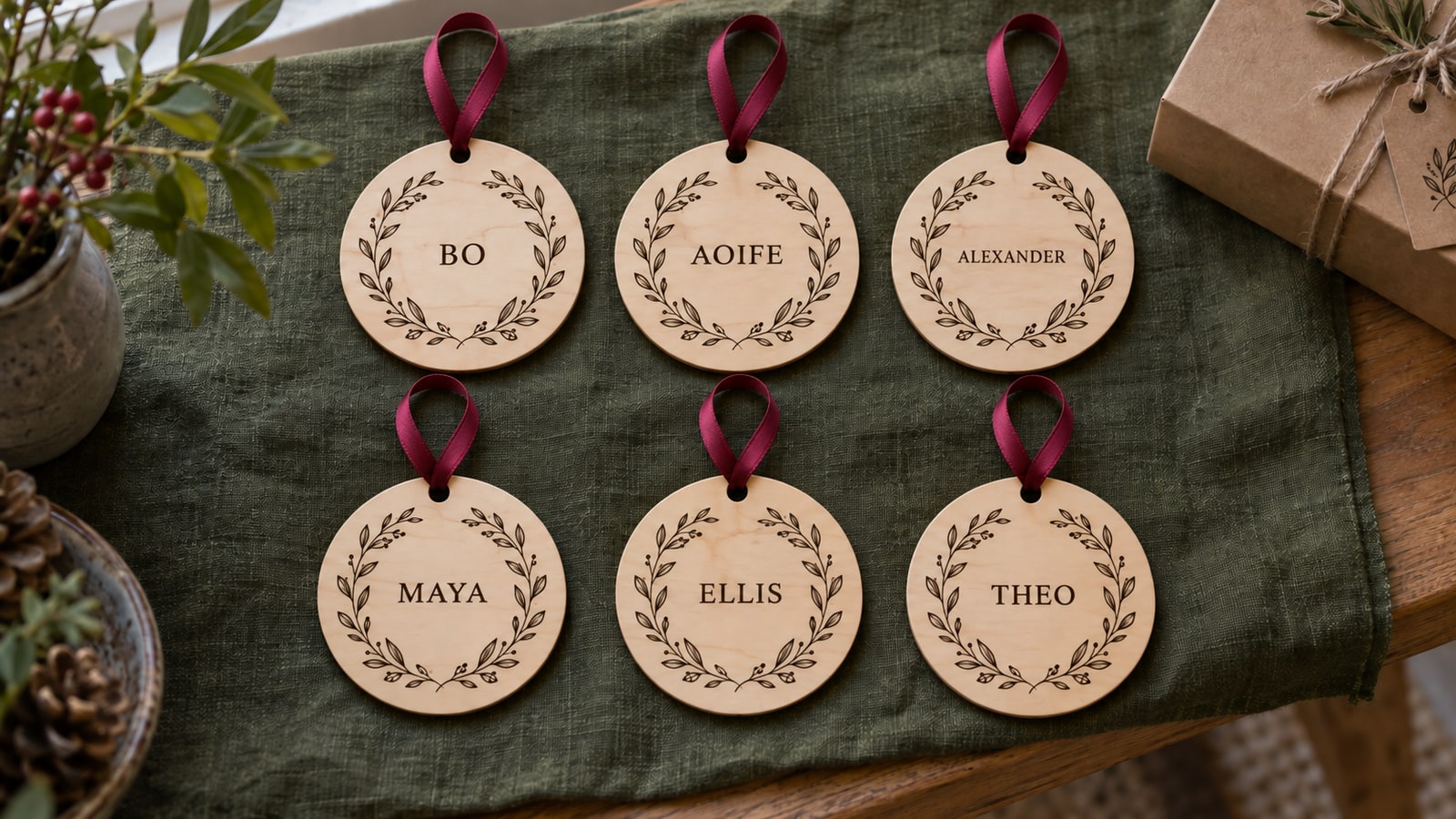
The table gets set once and photographed a hundred times. Small wooden pieces at each place, tags on the presents under the tree, a napkin ring holding a sprig of something green.
These small projects are a manageable place to start. Suitable offcuts can cover a whole table, and a short test run tells you how much time to allow for the set.
Gift tags
The easiest thing in this whole post and the one people make most of.
A tag is a small shape with a hole in it. Everything after that is decoration. A snowflake, a tree, a holly sprig, a simple rounded rectangle with a border. Thread twine through the hole and it is done.
Three things make them better:
Size the hole for the cord and preserve the edge. A tiny hole is fiddly to thread, but enlarging it too close to the edge weakens the tag. Test the actual twine and leave a generous band of unbroken material around the hole.
Cut them in sheets, not one at a time. Tags nest tightly, and three or four of them occupy about the area of a single coaster, so a modest offcut turns into a useful pile of them. This is the project that most rewards batching.
Leave room for a name. A tag with no space to write on is a decoration rather than a label. Either engrave the name, or leave a plain panel and write on it.
Card works as well as wood here, and it is faster to cut. Wood feels like a gift in its own right and people keep them.
 Christmas Designs100 designs, commercial license included$3.99
Place cards
The piece that does the most work for the least material.
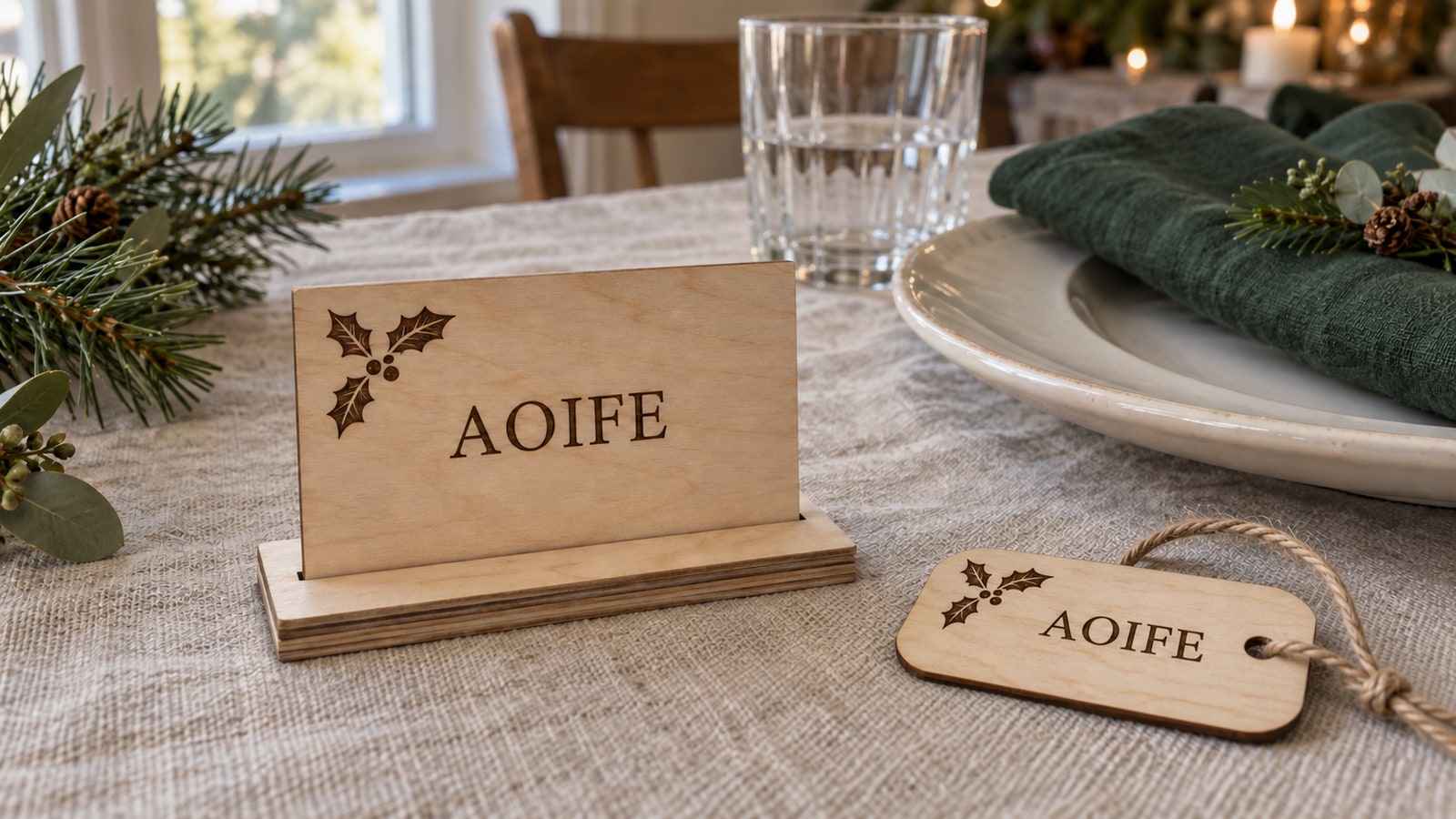
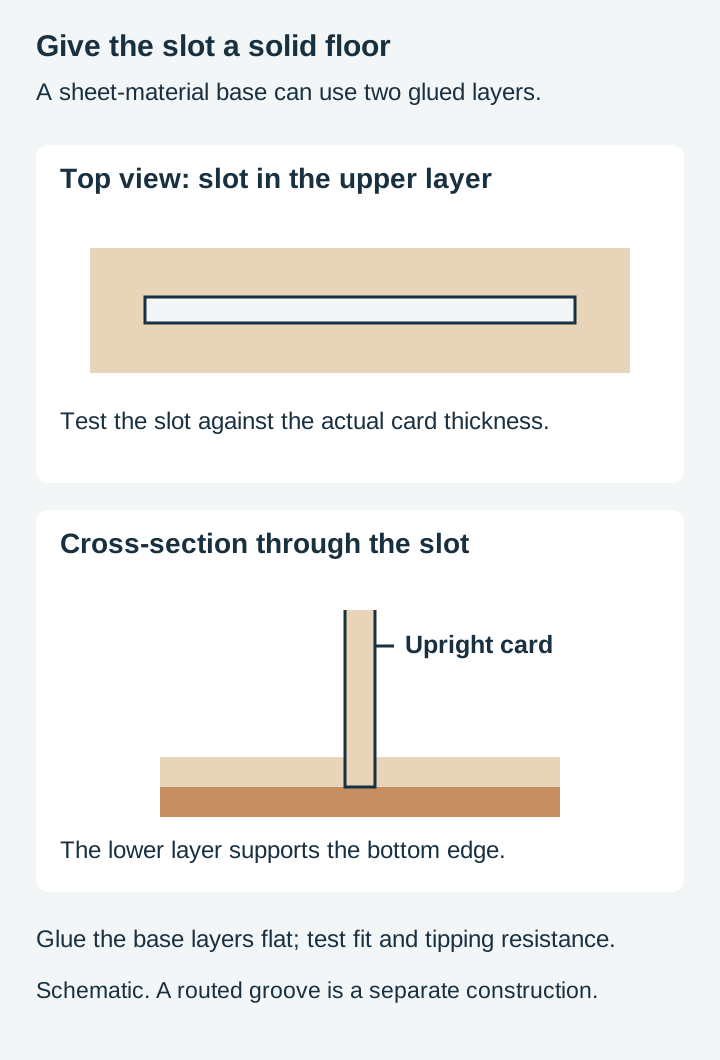
A place card needs a stable base. For sheet material, cut a through-slot in an upper base layer and glue that layer onto a solid lower base. The lower layer supports the card while the slot locates it. Measure the actual card thickness, test the slot fit and make the footprint deep enough that a light bump does not tip it.
A routed groove in a thicker block is another option. It is a different operation from a laser through-cut; do not assume a partial-depth laser pass produces a precise slot.
If you are working in card, a fold at the bottom does the same job with no second piece.
What makes these sell as a set rather than a novelty is consistency. Ten identical cards with ten different names looks like something somebody made deliberately. Ten slightly different shapes looks like leftovers.
The names are the part to get right, and they carry the same hazard as any personalised work: spelling. Guests have names you have not seen written down, and a place card with a misspelling is noticed by exactly one person and remembered by all of them. Ask the host for the list in writing.
 Christmas Letters And Numbers Design Pack37 designs, commercial license included$3.99
Napkin rings
Slightly more ambitious and still an afternoon.
A napkin ring is a band with a decorative front, and how you get a flat sheet into a ring depends on the material. Card folds. Plywood does not, so the usual answers are a full ring cut as a closed circle, two flat pieces that slot into each other, or a kerf-bending pattern that lets a strip curve. For a flat plywood ring, keep a continuous band around the central napkin opening. Decoration can extend from the band, but any cut-through detail needs physical bridges or a backing that keeps its islands attached.
That cut-through version is worth the extra effort because it uses the napkin as part of the design, and a green or red napkin behind a snowflake looks far better than the same snowflake on its own.
Size is the thing to check. Rolled napkins vary a lot, and a ring that is beautiful and too tight is a ring nobody uses. Measure one you actually own before cutting twelve.
Glass charms and bottle tags
Two small variations worth knowing.
Wine glass charms hang off a glass stem so people can tell their drink apart. A rigid charm can use an open access slot leading to a larger stem opening, but an opening that admits the stem can also let it escape. Test the fit on the intended glass, or hang a small tag from a closable charm ring.
Bottle tags hang round the neck of a bottle you are giving. Slightly larger than a gift tag, with a bigger hole, and they turn a bottle of something into a present.
Making a lot of them
The whole category lives or dies on batching, so it is worth being deliberate.
Choose the production order. Engraving names before cutting keeps the sheet registered. Pre-cut blanks are useful too, provided a locating jig holds them in known positions. Leave appropriate spacing and support between nested pieces.
Engrave the names in a second run, laid out across a sheet of blanks. If you are doing more than a handful, a jig that holds the blanks in known positions turns twelve alignments into one.
Finish and thread in one sitting, with everything in front of you.
Done that way the whole set is one sitting rather than a series of them. How long that sitting takes depends on your machine and how much engraving is in the design, so time one small run before promising anybody a date.
Our ornament orders post covers collecting names properly, and the same approach applies here.
What to use them for beyond your own table
These are small, cheap to make, and finished. That makes them useful in ways a big wall piece is not.
As an add-on at a stall. Somebody buying a larger piece will often add a set of tags at the till. Allow for machine time, finishing and packing even when the stock comes from offcuts.
As the free thing in a parcel. A tag tucked into an order can be a thoughtful extra; include its time and materials in your margin.
As a commission for a host. Twelve place cards for a dinner party is a small, well-defined, quick job with a firm deadline, and it is a good introduction to custom work without much risk.
As a way to use up material. Every project leaves offcuts too small for anything substantial and exactly right for a tag.
One suggestion
Cut a sheet of plain tags with no design on them at all, then engrave four or five different motifs across them and see which one you like in the hand rather than on screen.
Small pieces read completely differently at actual size, and the design you expect to prefer is often not the one you do. It costs one offcut to find out.
Every pack is $3.99 and ships as SVG, PNG, JPG, PDF, and EPS, so the same motif covers the tag, the place card and the napkin ring. The commercial license is included with every purchase with no cap on how many physical products you sell.
Browse the holidays collection for the rest of the season.
Designs for this project
Frequently Asked Questions
What is the best material for wooden gift tags?
Thin birch plywood is the usual choice and it is hard to beat for the price. It engraves to a clear warm brown, it cuts fast, and a tag is small enough that offcuts from bigger projects will make dozens. Thin card also works if you are cutting rather than engraving.
How do I make place cards stand up?
Three ways, in rising order of effort: cut a slotted base the card drops into, fold a tab at the bottom if you are working in card, or lean it against the glass and accept that it is a flat tag. The slotted base looks the most deliberate and is one extra small cut per setting.