There is a whole decorating idiom built around two animals, and if you make anything for a lake house, a lodge, a hunting camp, or somebody's basement bar, you already know it.
Bear and moose carry cabin decor almost single-handedly. What is less obvious is that they are structurally opposite problems, and one of them will break on you far more often than the other.
Tip
Short answer: bears are one of the most robust silhouettes in wildlife, and moose antlers are among the most fragile shapes in the whole catalogue. Add a treeline or a mountain to either and it stops being an animal and starts being a place, which is what cabin buyers are actually after.
Bears are structurally easy
Worth understanding, because it explains why bear designs go on everything.
A bear in profile is a heavy solid mass. Short thick legs, a rounded back, small round ears set close to the head, and a stub of a tail. There is nothing projecting far from the body on a narrow connection, which can make a bold outline more forgiving. Small toes, fur points and narrow gaps still deserve inspection.
That makes bear silhouettes one of the more forgiving wildlife subjects. They generally scale down further than the rest of this group before anything becomes fragile, and they usually weed without drama in vinyl. Where your own floor sits still depends on the material, the spacing and the machine, so test before a batch.
The one that is harder is the roaring bear. An open mouth introduces a jaw line, teeth, and a tongue, and those are fine internal details on a design that is otherwise all mass. Engraved they are fine. Cut small they close up into a dark smudge, and the bear stops reading as roaring and starts reading as damaged.
Bear and cub compositions are worth calling out. Like the sow and piglets in our homestead animals post, a mother-and-young pairing carries a sentiment a single animal does not, which makes it worth stocking alongside rather than instead. We hold no sales data comparing the two.
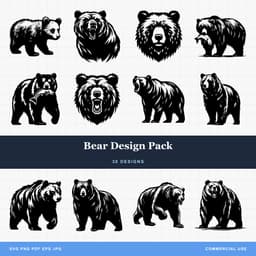 Bear Design Pack30 designs, commercial license included$3.99
Grizzlies, and detail versus silhouette
The grizzly designs split the category the same way the horse designs do, and the split is worth understanding before you pick a file.
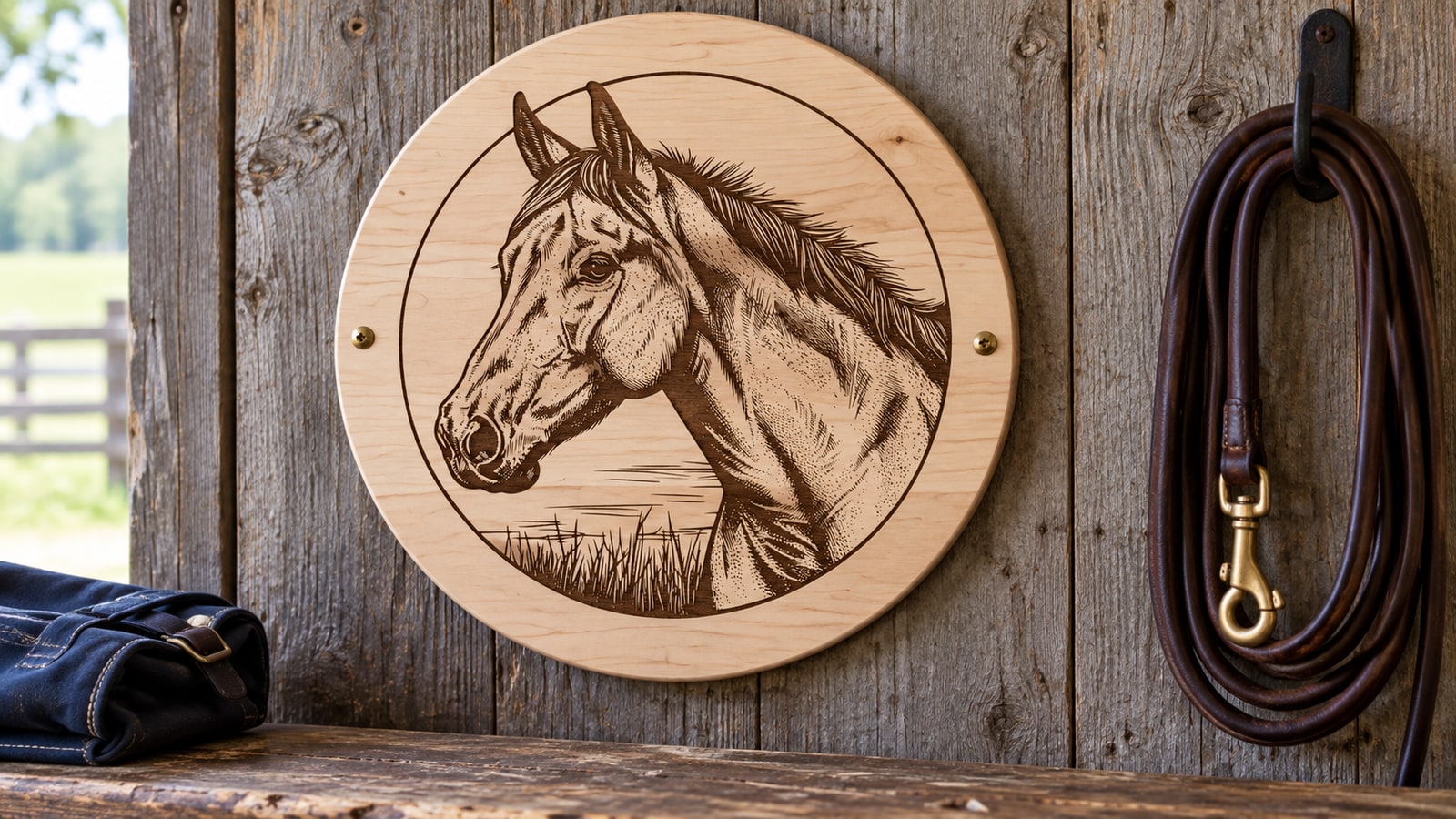
Detailed head studies are engraving subjects. A grizzly head with the coat direction, the brow and the eye rendered properly is a genuinely good-looking object on walnut, although excessive nodes can still slow import, editing or toolpath preparation.
Standing and walking silhouettes are cutting subjects. Bold, solid, no interior detail to lose.
Trying to cut the detailed version is where people waste material. Coat texture in a cut file becomes either a ragged edge or a collection of thin slivers, and neither reads as fur. Our post on low detail versus high detail designs covers choosing between them.
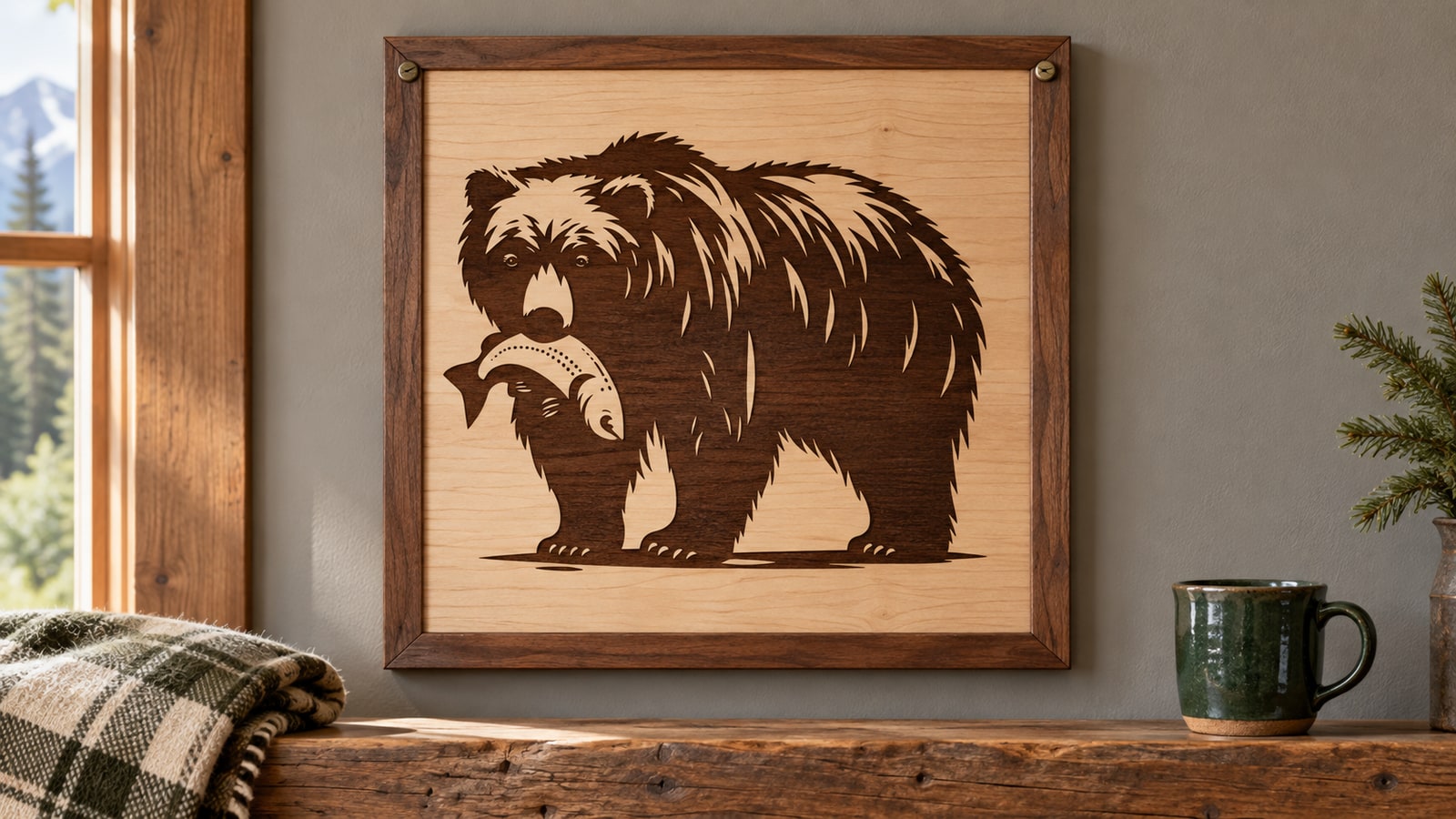
Bear catching fish is the composition we would reach for first. It reads as a place rather than an animal, which is the cabin thing, and the fish gives the design a second point of interest but the fish tail, fins and gaps need review if the piece will be cut through.
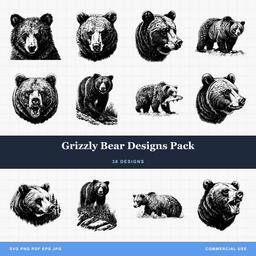 Grizzly Bear Designs Pack38 designs, commercial license included$3.99
Moose antlers are the problem
Everything difficult about this subject lives in the antlers, and it is worth being specific about why.
A moose antler is a broad flat palm with a row of narrow points around its outer edge, and the whole thing is carried on a relatively narrow connection where it meets the skull. That is three separate hazards stacked on one feature: the points are thin, the palm is wide enough to be heavy, and the connection is the narrowest part of the design carrying the most weight.
Larger signs allow more material in these features, but size alone does not guarantee strength. Check the points, antler base, grain direction and mounting.
The fixes are all deliberate compromises, and a well-drawn moose file has already made one of them.
Thicken the points. A moose with slightly blunter antler points still reads as a moose. A moose with anatomically correct points and three of them missing does not.
Reduce the point count. Fewer, larger points survive where many fine ones do not, and at a distance nobody counts.
Widen the connection. Where the antler meets the head is where the load is. A little extra material there costs nothing visually.
Use a head study against a background. A moose head with a treeline or a mountain behind it can provide support when the paths form actual material connections, or when the artwork is fixed to a continuous backboard. A background that only overlaps visually does not support a cut-out.
Or go full body and keep it large. A moose in a forest silhouette is a wall piece, and can allow broader antler features. Check its actual connections at the intended size.
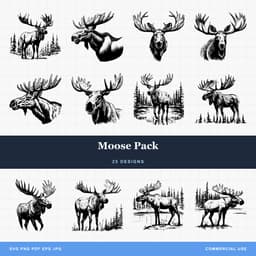 Moose Pack25 designs, commercial license included$3.99
Polar bears are a different product
Worth separating, because they sit in the same wildlife category and behave nothing like the others commercially.
Grizzlies and black bears are cabin and lodge decor. They sell in the right regions all year, they go on signs and panels and boards, and the buyer is decorating a space.
Polar bears skew toward winter, Christmas, and humour. Hibernation jokes, snowstorms, bears standing upright, paw prints. That reads as seasonal rather than wildlife, which suggests treating it that way: smaller items, gift context, and a run made ahead of the season rather than stock carried all year.
Structurally they are the easiest of the lot. A bold polar bear outline has no antlers, but fine coat detail, lettering and disconnected regions vary by design.
If you make ornaments, this is the pack in the group that belongs in that run rather than on a lodge wall. Our ornament materials post covers the materials side of that.
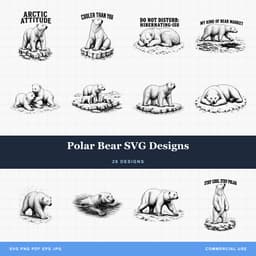 Polar Bear SVG Designs28 designs, commercial license included$3.99
What makes it read as cabin
The most useful commercial idea here, and it is a composition point rather than a subject one.
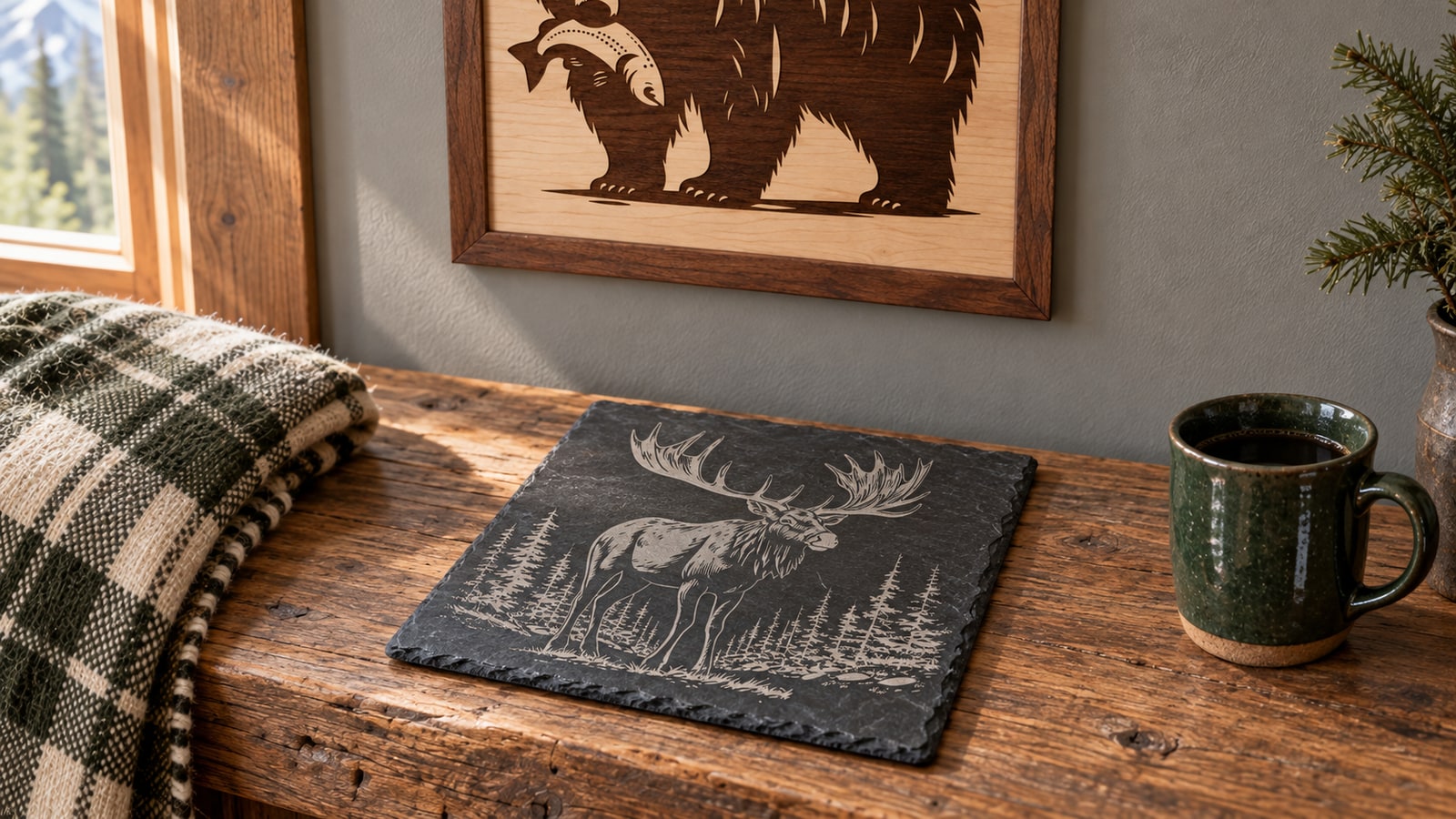
A bear on a plain background is a wildlife design. A bear in front of a treeline is a cabin design. The animal has not changed; the context has, and the context is what the buyer is actually responding to.
Three elements do almost all of that work:
A treeline. Pines behind the animal, usually as a simple silhouette band. Useful when the tree shapes are intentionally connected to the animal or supported by a backing, and it turns any animal into a scene.
Mountains. Same job, and it pairs particularly well with moose and grizzlies.
Water. A lake edge or a river, which is what makes the bear-catching-fish composition work.
This is also why cabin and camping content sits so naturally alongside this category: it is the same buyer decorating the same room. Our camping designs post covers that side of it.
Matching treatment to job
The notes below are a design-side starting point drawn from how we build these files rather than results measured on machines we own. Test on your own material before a batch.
| Subject | Best treatment | First thing to fail small |
|---|---|---|
| Standing or walking bear | Bold silhouette at a tested size | Fur tips, toes and narrow gaps |
| Roaring bear | Silhouette large, engraved small | Jaw and teeth closing up |
| Grizzly head study | Engraved only | Coat texture turning to mud |
| Bear and cub | Silhouette, medium and up | The cub, which is small already |
| Moose, full body | Large silhouette with a treeline | Antler points, then the antler base |
| Moose head study | Engraved, or cut with a backing | Antler points |
| Polar bear | Bold silhouette or engraving | Small lettering and fine detail |
The pattern is the same one that runs through farm animals and breed work: the feature that identifies the animal is the feature most likely to break. For a moose that is the antlers, and there is no way around it except deciding in advance how much anatomy you are willing to trade.
Where to start
Cut a bear silhouette with a treeline behind it. It is forgiving, it demonstrates the cabin composition idea in one piece, and it will tell you how the category behaves in your material without the antlers adding a second variable.
Then try a moose at two sizes and find out where your antler points give up. That number is the useful thing to know for everything else in this group.
Every pack is $3.99 and ships as SVG, PNG, JPG, PDF, and EPS, so one purchase covers the cut wall panel, the vinyl decal, and the sublimated mug. The commercial license is included with every purchase with no cap on how many physical products you sell, and print-on-demand is allowed.
Browse the wildlife collection for the rest of the northwoods.
Designs for this project
Frequently Asked Questions
Why are moose antlers so difficult to cut?
Because the shape is broad palms with narrow points around the edge, all carried on a relatively thin connection to the skull. Each point is a projection that can snap, and the connection where the antler meets the head carries the most load on the least material. It is the part of a moose design we would check first.
Which bear design is easiest to work with?
A standing or walking bear in profile. It is a heavy solid mass with broad body mass and relatively short projections, which makes it one of the more forgiving wildlife silhouettes. A roaring bear with an open mouth is harder, because the jaw and teeth introduce fine detail.
Do polar bears sell to the same buyer as grizzlies?
Not really. Grizzlies and black bears are cabin, lodge and northwoods decor, and they sell year round in the right regions. Polar bears skew toward winter, Christmas and humour, so they behave much more like a seasonal design than a wildlife one.
What makes a design read as cabin rather than just wildlife?
Context in the composition. A bear on its own is a wildlife design. A bear in front of a treeline, or with mountains behind it, reads as a place rather than an animal, and that is what makes it a cabin piece.