Horse people are a world with its own language, and they can tell within about two seconds whether you are part of it.
That is the useful thing to know before making anything for this market. Accurate anatomy and familiar wording help a piece feel relevant to this audience. Check those details and test demand with a small range.
Tip
Short answer: four treatments cover this subject. Bold silhouettes for cutting, detailed head studies for engraving, tribal styling for the pieces in between, and barn sayings, which are easy to underestimate. Match the treatment to the process rather than picking the prettiest file.
Why a horse is a difficult silhouette
Worth understanding before you choose a pose, because it explains most of what goes wrong.
A horse is a heavy body on four thin legs, with two of the most recognisable features being a mane and a tail that both taper to nothing. Every part of that description is a problem for a cut file.
The legs. In a freestanding profile the legs support the body. In a wall-mounted piece the fixings or backing carry the load, but the narrow legs can still be fragile. Reduce the piece and they are the first thing to snap, usually while you are handling it rather than during the cut.
The mane and tail. A flowing mane is the thing that makes a horse look like a horse rather than a large dog, and it is drawn as fine tapering strands. As cut shapes those are unsupported slivers.
The gap under the body. A horse in profile has daylight between its legs and under its belly, so the outline has to travel all the way around and back. That is fine on a big piece and it is a lot of thin material on a small one.
The design answer to all three is the same and it is not complicated: thicken deliberately, join the mane into larger flowing lobes rather than individual strands, and choose poses where the legs are not doing all the work. Overlapping legs or a connection to a border can improve support when they create sufficiently wide joins. A grazing pose alone does not guarantee stronger geometry.
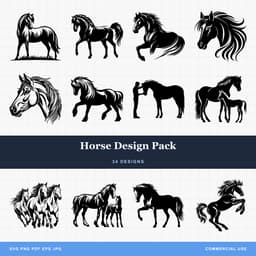 Horse Design Pack34 designs, commercial license included$3.99
Head studies are the workhorse
If you take one thing from this post: the head study solves nearly every problem above.
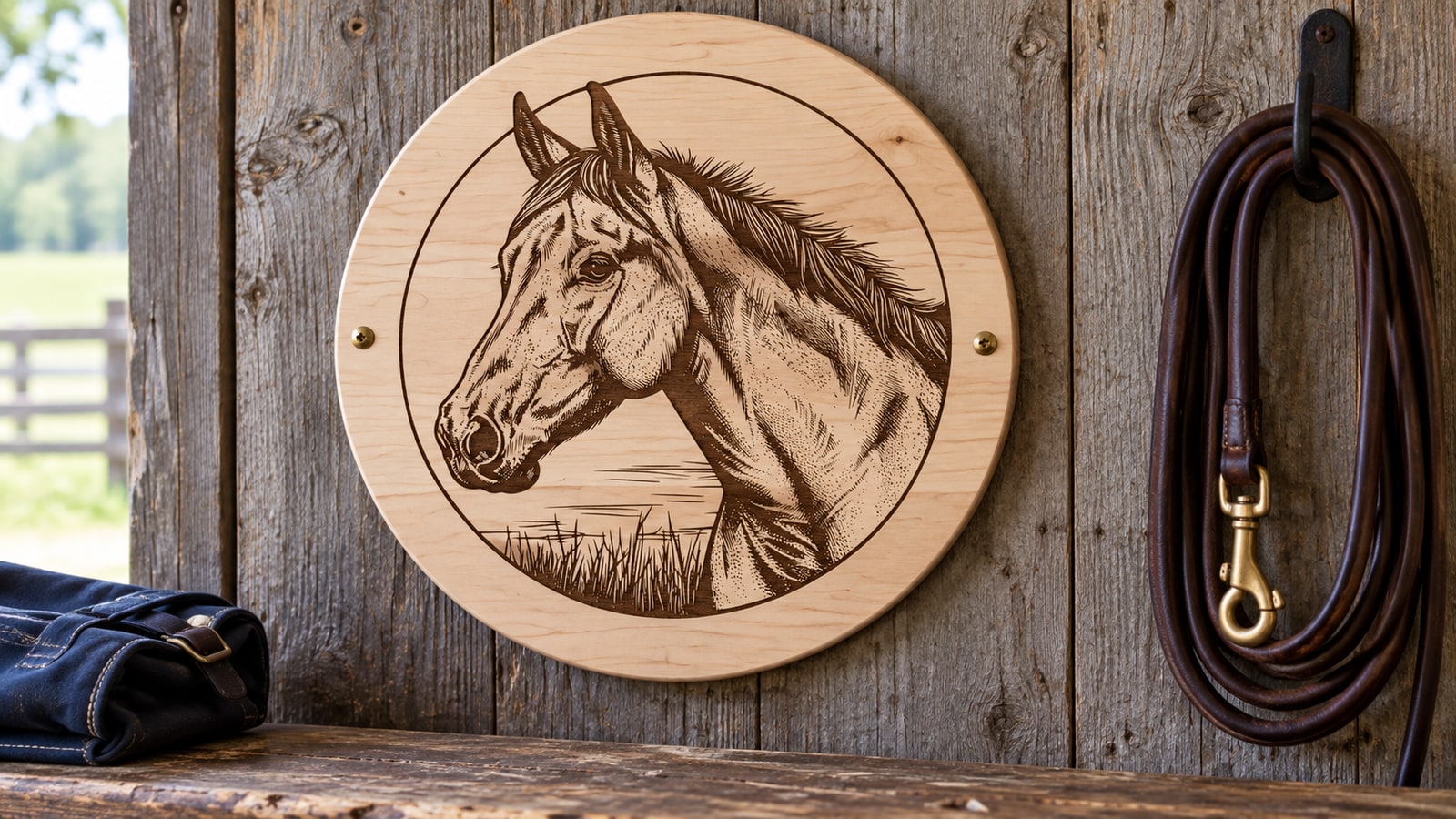
A horse head in profile has no legs, no gap under the body, and a mane that can be treated as one flowing mass. It is a compact closed shape. It also happens to be the most recognisable part of the animal, and the part that carries expression, so you lose almost nothing by dropping the body.
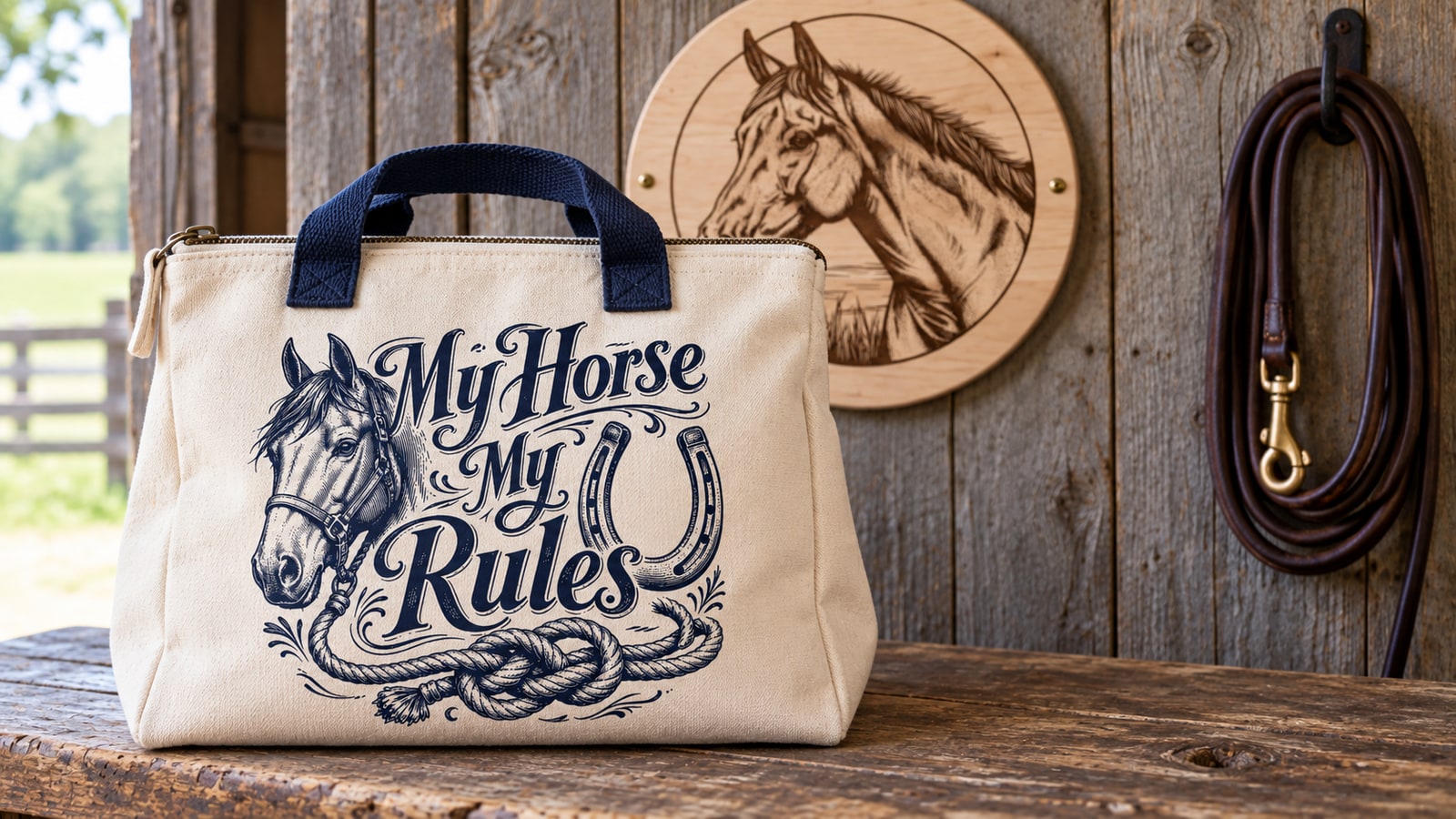
That is why detailed head designs dominate the engraving side of this subject. A head study engraved on a solid blank preserves detail without creating loose cut pieces. Choose a material and finish with enough contrast; the maple example above makes dark marks easier to see. Fine texture still has a resolution limit.
Head studies inside a circle work particularly well, because a round frame gives the composition an edge to sit against and round blanks are widely stocked in most materials. The same design goes onto a coaster, a medallion, a clock face, and an ornament without redrawing anything.
Floral wreath treatments around a horse head are their own small category, and they sell to a different buyer than the plain portrait does: more gift, less tack room.
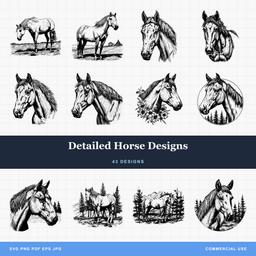 Detailed Horse Designs43 designs, commercial license included$3.99
The sayings are the sleeper product
This is the part people underestimate, and we think it is the most commercially useful idea in this post, though it is a judgement from how the designs are built rather than from sales figures we hold.
Barn culture has an established vocabulary. Phrases about barn hair, about horses being cheaper than therapy, about chores before cheers, about leaving the gate how you found it. A rider reads one of those and recognises their own life in it, which is a different kind of appeal from looking at a picture of a horse.
Three reasons the sayings outperform their apparent effort. A saying in simple bold type can cut and weed more easily than a detailed animal, although illustrated sayings can be just as intricate. They fit the products people actually buy for a barn, which are signs and tack room decor rather than wall art. And they are specific enough to signal insider knowledge, which is the thing that makes somebody trust the rest of your table.
The practical note is that lettering brings its own problems, including retained counters in stencil openings and overlapping script letters. Our text to paths post covers preparing lettering properly before it goes near a machine.
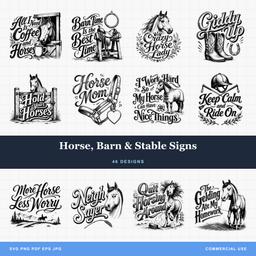 Horse, Barn & Stable Signs46 designs, commercial license included$3.99
Tribal styling, and who it is for
Tribal treatments of horses appeal to a different taste than the realistic designs, and it is worth carrying both rather than assuming one covers the other.
Structurally they are a gift. Tribal styling is already reduced to bold flowing shapes with deliberate connections, which is much closer to what a cut file wants. A realistic mane's thin tapering strands are largely designed out by the style. Check the actual file at the size you intend before assuming it is safe, since features and spacing still have to suit your material.
That makes tribal horses one of the few treatments in this subject that works well as a cut piece at moderate sizes without needing much rework. Vinyl decals, cut-through panels, layered pieces.
They also suit a different product mix. Tribal designs go on vehicles and trailers more than realistic ones do, which matters in a market where a lot of people own a horse trailer and drive it to events where other horse people will see it.
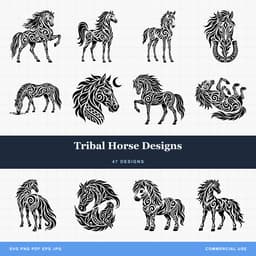 Tribal Horse Designs47 designs, commercial license included$3.99
Matching treatment to job
The notes below are a design-side starting point drawn from how we build these files rather than results measured on machines we own. Test on your own material before committing to a batch.
| Product | Treatment | Watch for |
|---|---|---|
| Barn or tack room sign | Sayings, with or without a small silhouette | Retained stencil counters and overlapping letters |
| Engraved plaque or portrait | Detailed head study | Large dark areas scorching unevenly |
| Coaster, medallion, ornament | Head study in a circle | Fine coat texture merging at small size |
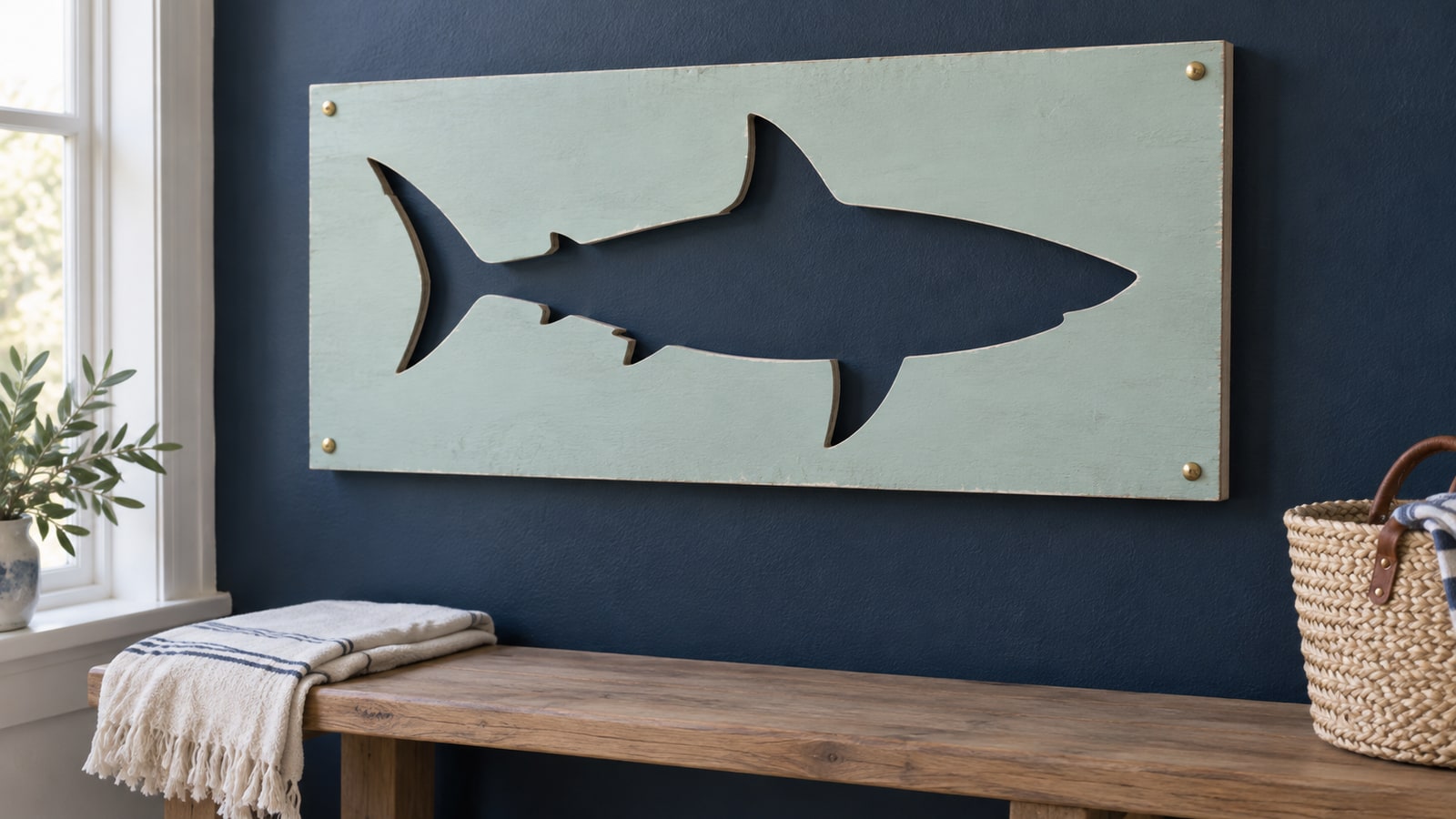
| Cut-through wall piece | Bold silhouette, legs overlapping | Legs and mane at the narrow points |
| Vinyl decal for a truck or trailer | Tribal, or bold silhouette | Thin sections lifting during weeding |
| Keychain or charm | Compact head or simplified full body | Thin legs, ears, mane and attachment holes |
| Sublimated mug or shirt | Detailed head, or a saying | Image resolution and colour profile |
Full-body cut-outs often need more room or support than compact head studies. Small printed or engraved full-body designs can still work; check the actual strokes and gaps for the chosen process.
Selling to the barn
A few things about this market specifically.
Boarding stables are concentrations. Twenty owners who see each other several times a week and all have tack lockers to decorate. One good piece hanging in a shared space does more than a market stall does.
Events are the selling opportunity. Shows, clinics, and rodeos put a lot of horse people in one field with time to browse.
Personalisation is expected here. Horses have names, and their owners will want the name on the thing. That is a custom order workflow rather than a stock item, and it needs the name confirmed in writing before you cut. Our personalisation post covers handling it.
Price for the market. People who own horses are used to spending money on them. This is not a category where the cheapest thing on the table wins. Our pricing post covers the reasoning.
Where to start
Make a barn sign with a saying on it. Start with readable wording and a manageable treatment, then use customer response to guide the next pieces.
Then add an engraved head study on a round blank, because that is the piece people pick up.
Every pack is $3.99 and ships as SVG, PNG, JPG, PDF, and EPS, so one purchase covers the engraved plaque, the trailer decal, and the sublimated mug. The commercial license is included with every purchase with no cap on how many physical products you sell, and print-on-demand is allowed.
Browse the farm animals collection for the rest of the barn.
Designs for this project
Frequently Asked Questions
What is the hardest part of a horse design to cut?
The legs, and then the mane and tail. A freestanding profile relies on narrow legs; on a wall display, support instead depends on its mounting points. Thin legs remain vulnerable during handling. Flowing mane and tail detail is worse, because it tapers to nothing by definition. Head studies avoid leg details, although ears and mane still need a final-size check.
Do horse sayings sell as well as horse artwork?
Worth stocking alongside the artwork rather than behind it. Barn culture has its own vocabulary, and a sign that quotes it correctly signals that whoever made it knows the world. We have no sales figures comparing the two, but simple bold lettering can be easier to cut and weed than a detailed animal. Decorative lettering and illustrated sayings need their own inspection.
Which horse treatment suits engraving versus cutting?
Detailed head studies usually suit engraving or printing. Bold silhouettes can suit cutting. Tribal artwork can still contain detached islands and narrow strokes, so inspect the actual geometry and backing requirements.
Is the equestrian market worth stocking for?
It is small, specific, and spends well. Horse ownership is expensive and the people in it buy for their barn, their trailer, their tack room, and each other. A boarding stable is a concentration of buyers who all know each other, which makes word of mouth unusually effective.