Shark designs can anchor a summer craft range, especially in a coastal market.
That distinction matters more than anything else in this post, because it changes when you cut, what you cut, and how much of it you make. Seasonality depends on the audience and location. Plan the first run around your own market dates and sales, then adjust stock instead of assuming every shark product has the same selling window.
Tip
Short answer: shark products are a summer sell into two distinct buyers, coastal rental owners who want decor and holidaymakers who want a souvenir. Build stock in spring, price a ladder from keychain to sign, and lead the stall with the biggest piece you have.
Why the shark is the easy one
Worth saying plainly, because it is unusual in sea life: the shark silhouette is structurally excellent.
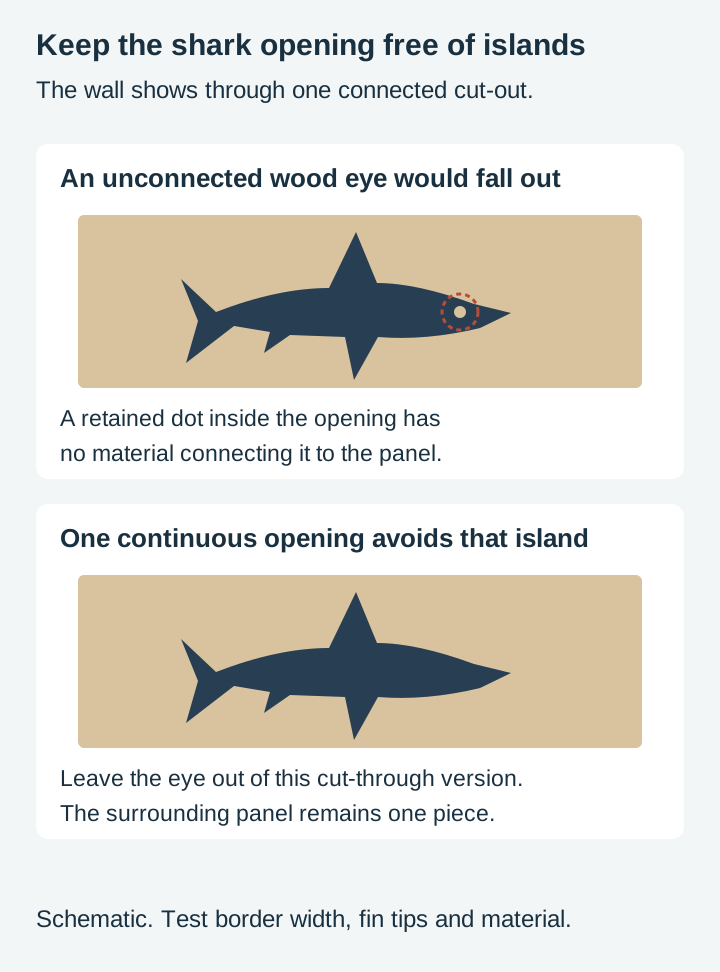
Our deep sea post is largely about damage control, because octopus arms and jellyfish tendrils are so hostile to a blade. The shark is the opposite. It is a single closed torpedo with a handful of triangular fins. A bold treatment can avoid internal lacework. Fin and tail tips can still be delicate, and any retained islands in a stencil or cut-through sign need support.
Check the narrowest fins, tail connection and gaps at the final size. A compact silhouette can be easier to handle than a fine tentacle design, but success still depends on geometry, settings and material.
The only real decision is which shark, because the profile carries the character:
- Great white in profile. The classic. Bulky, blunt-nosed, unmistakable.
- Shark from below, mouth open. The dramatic one. Sells to the same person who buys the octopus panel.
- Hammerhead. The most instantly recognisable silhouette of any shark, and the best choice for small items where a generic shark shape would be ambiguous.
- Fin only, breaking the surface. The most versatile piece in the category. Minimal, instantly readable, and it works as a border, a repeat, or a tiny charm.
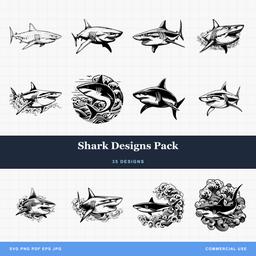 Shark Designs Pack35 designs, commercial license included$3.99
The two buyers
They want different things and they do not overlap much.
The coastal property buyer owns or manages a beach house, a rental, or a lake place. They want decor: signs, house numbers, bathroom and bunk room pieces, wall art. They buy larger items, they buy in sets, and they buy before the season rather than during it. They will pay more, and they are a repeat customer if the first piece holds up.
The holidaymaker is on the boardwalk with their family and buys in the moment. They want small, cheap, immediate, and ideally personalised on the spot. Keychains, magnets, decals, small tokens for the kids.
If you sell at a coastal market you are meeting both in one day, which is why the price ladder matters more here than in most categories.
Building the ladder
The idea is that everyone who stops at the table can buy something, and the big piece justifies the small ones by making the stall look serious.
This is a product-planning starting point drawn from how the designs are built rather than from sales data we hold, so adapt the sizes and pieces to your own market and materials.
| Tier | Product | Design to use |
|---|---|---|
| Impulse | Keychains, magnets, small charms | Fin only, or hammerhead silhouette |
| Small gift | Vinyl decals for bottles and cars, shark tooth charms | Bold silhouette, tooth shapes |
| Mid | Engraved coasters, small bunk room signs, mugs | Profile shark with light interior detail |
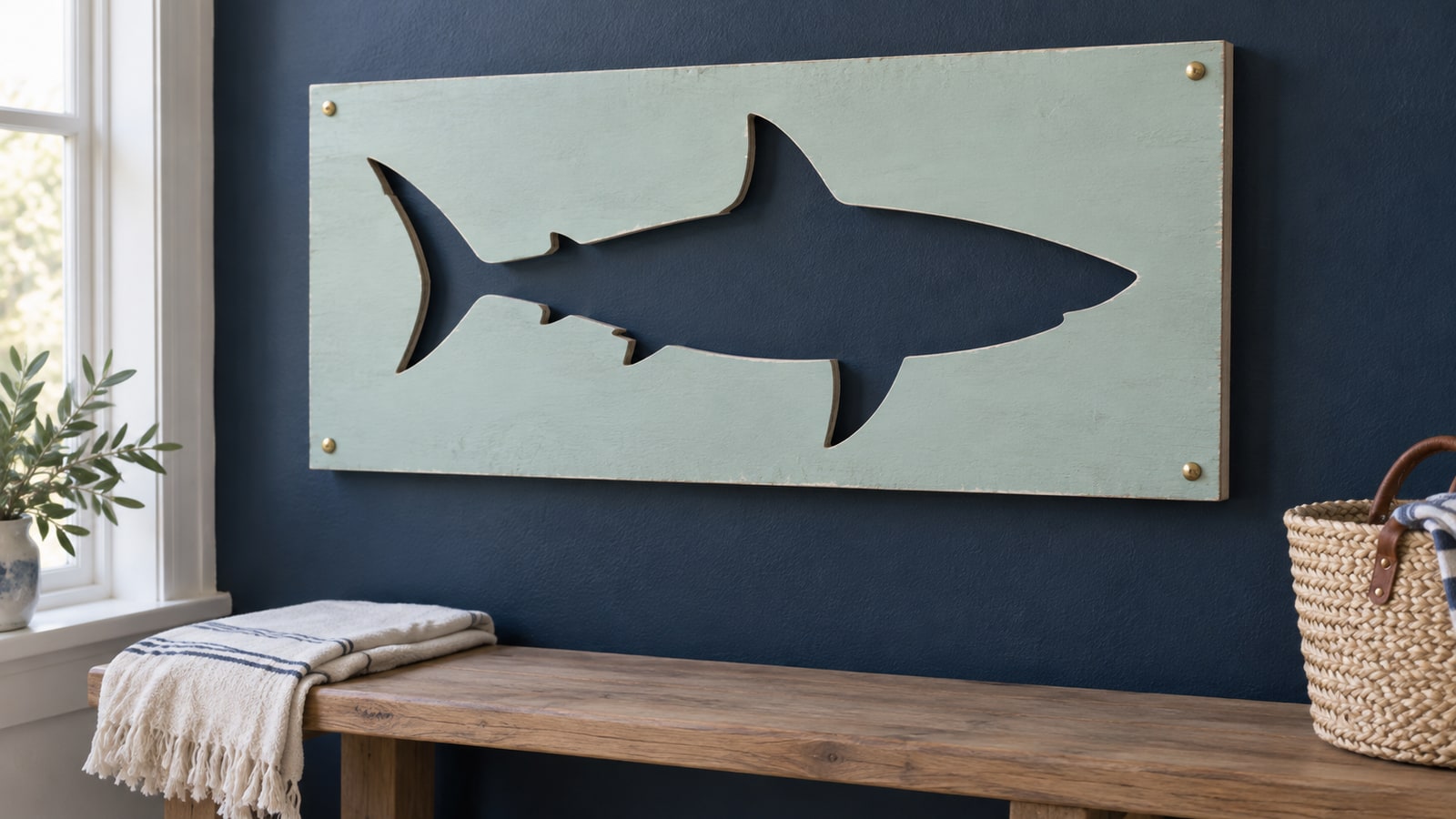
| Statement | Cut-through house sign, large wall piece | Great white profile or below-view |
The cut-through sign is the one worth building the stall around. A shark cut clean through a painted board, so the wall colour shows through the silhouette, photographs beautifully and reads from across a market. It does not have to sell often to earn its place, because its job is to stop people walking past.
Shark teeth are their own product
Do not skip these. A tooth is a simple triangular form with a slight curve, which makes it one of the most flexible shapes you can own.
As a repeated pattern it becomes a border along a sign, a band around a tumbler, or a fill inside a larger shape.
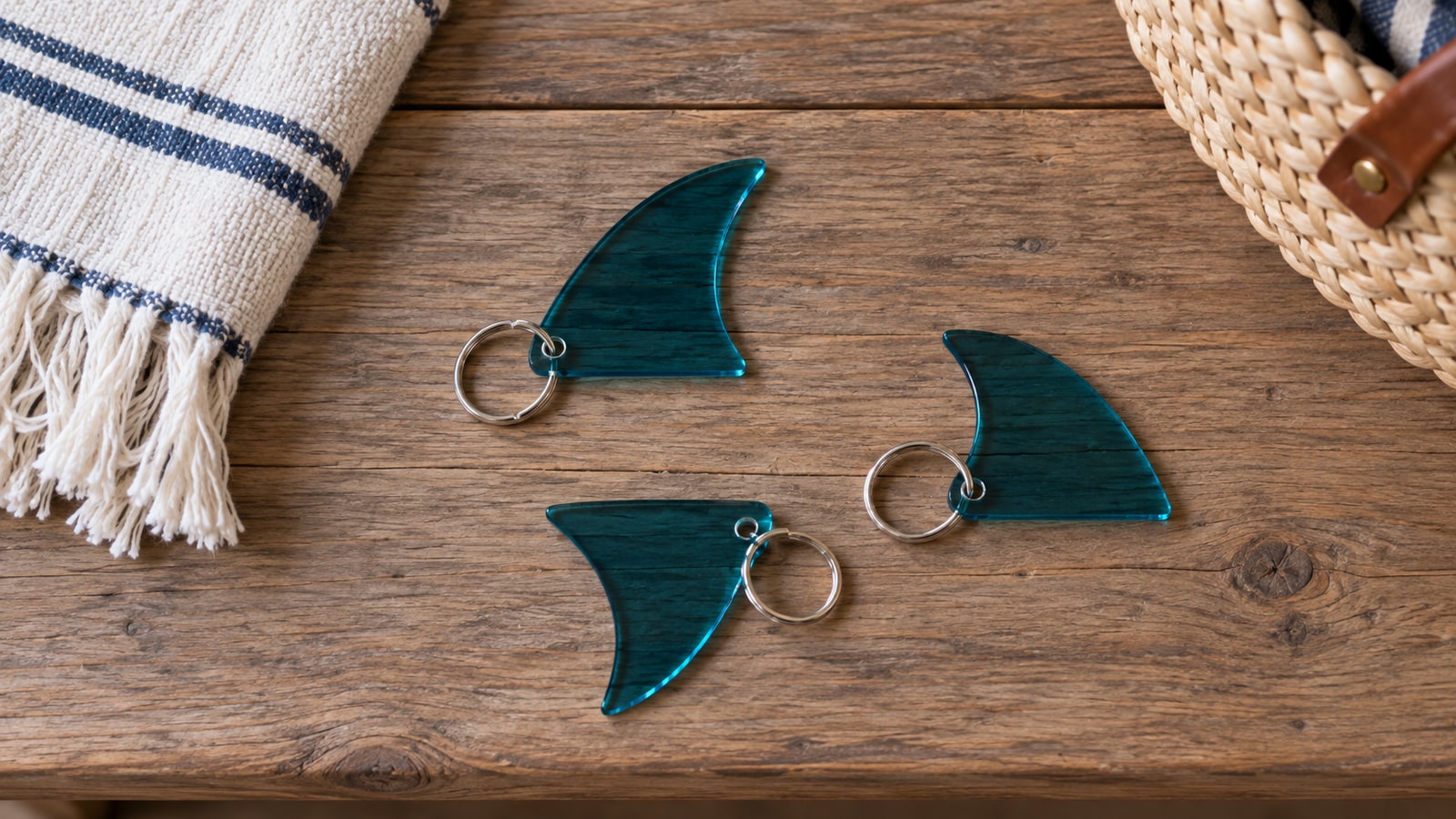
As a charm it is a fast cut in wood, acrylic, or leather, and it sells to the person who thinks a whole shark is a bit much.
As a set a graduated row of teeth mounted on a board reads like a natural history display, which is a genuinely different product from anything else on the table.
They also solve an inventory problem: teeth are quick to cut, they use offcuts, and they fill a gap in the ladder without needing new material.
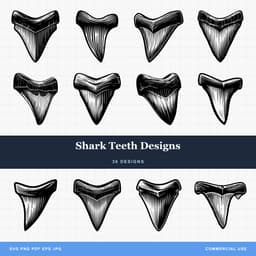 Shark Teeth Designs36 designs, commercial license included$3.99
The rest of the water
A stall of only sharks reads as a novelty. A stall of sharks with supporting sea life reads as a coastal range, and the wider range gives buyers more options.
Splashing fish, leaping game fish, and water motifs do that supporting work. They also stretch your range, since fishing subjects reach a different customer than beach decor and are less tied to the peak holiday weeks. Our fishing designs post covers that side properly.
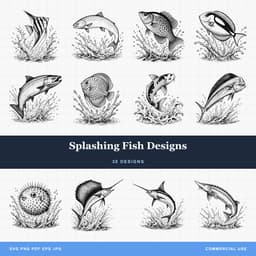 Splashing Fish Designs30 designs, commercial license included$3.99
Materials for a coastal market
Two constraints shape everything here: sun and salt air.
For outdoor signs, whatever you make will live in UV and humidity. Exterior grade material and a finish rated for outdoor use are the difference between a repeat customer and a complaint. Choose stock compatible with both the intended exposure and the cutting process, and it is worth following the manufacturer's guidance on the specific finish you use.
For indoor decor, the palette matters more than the material. Weathered and whitewashed finishes read coastal in a way that raw plywood does not, and a cut-through opening can contrast clearly with the wall behind it. Cut a verified compatible uncoated blank, prepare its edges, and apply a suitable finish; do not assume an unknown paint is safe to laser-process.
For impulse items, thin plywood and acrylic both suit small robust shapes. Check compatibility before you commit a sheet, since some plywood glues and some acrylic types are not suited to every machine, and follow the material supplier's guidance. Acrylic in blues and teals photographs well on a sunny stall.
For decals, the buyer is putting it on a car window or a cooler, so this is a case where outdoor rated vinyl genuinely matters rather than being an upsell.
Timing the run
The single most useful thing in this post: make the stock in the off season.
Shark interest clusters in summer, around school holidays and the long-running summer shark television programming. Treat that as a pattern to plan around rather than a guarantee, and watch your own market: lead time and a small initial run let you respond to what your own buyers choose.
Cut and finish in spring. Photograph in spring. Have the listings live before the season, not during it. Then spend the summer selling rather than making, which is also when your machine time is most valuable.
Our craft fair post covers stall mechanics more broadly.
Where to start
Make the fin. It is the fastest cut in the pack, it works as a keychain, a magnet, a decal, and a border, and it will tell you in one market whether your area buys this subject at all.
Then build up to the cut-through sign, because that is the piece that makes the table.
Every pack is $3.99 and ships as SVG, PNG, JPG, PDF, and EPS, so one file covers the sign, the decal, and the sublimated mug. The commercial license is included with every purchase with no cap on how many you sell, and print-on-demand is allowed, which matters if you want shark shirts on a print platform alongside the physical stock.
Browse the sea life collection for the rest of the range.
Designs for this project
Frequently Asked Questions
When should I make shark products for a summer market?
Cut and finish stock in late spring, before the season opens. Coastal rental turnover and beach town foot traffic both peak in summer, and advance preparation helps you meet that demand. Leave time for restocking if your own sales justify it. The making happens in the quiet months.
Do shark designs sell outside beach towns?
Yes, but to a different buyer. Inland the shark is a kids' bedroom and birthday subject rather than a coastal decor one, which changes the products: more decals, keychains, and shirts, fewer signs and boards.
What is the easiest shark product to start with?
A bold silhouette keychain or magnet. The shark outline is one of the most robust shapes in the catalogue, with no thin extensions except the fins, but tail and fin tips still need enough width for the selected material and size.
Is a shark tooth design different from a shark design?
Commercially, yes. A tooth is a simple geometric shape that works as a repeated pattern, a border, or a small charm, and it sells to people who would not buy a whole shark. It is the accessory product to the headline one.