Search for a Christmas SVG bundle and you get sold on the count. A hundred designs. Two hundred. Five hundred for the price of a coffee. The count is the least useful number on the listing, because it tells you nothing about whether a single one of those designs works on the thing you actually plan to make.
Here is the trap. You buy a big seasonal bundle in September, plan a craft fair table around it, then discover in October that the gorgeous Santa portrait you wanted on 200 gift tags turns to grey mush below about three inches. The design was fine. It was drawn for a sign, and you asked it to be a tag.
So the useful question is not which Christmas bundle is biggest. It is which one is drawn at the size and shape of the thing you are making.
Tip
The short version: ornaments want a portrait or round design with a bold silhouette and somewhere to put a hole. Signs want detail, because detail is finally legible at 12 inches. Gift tags want one shape and almost nothing else, because you are cutting two hundred of them. Cutting boards and trays want a composed layout that fills a rectangle. Those are four different design jobs, and no single pack is best at all four.
Start from the product, not the pack
The reason a design fails is almost always scale, and scale is unforgiving in a way that surprises people the first time.
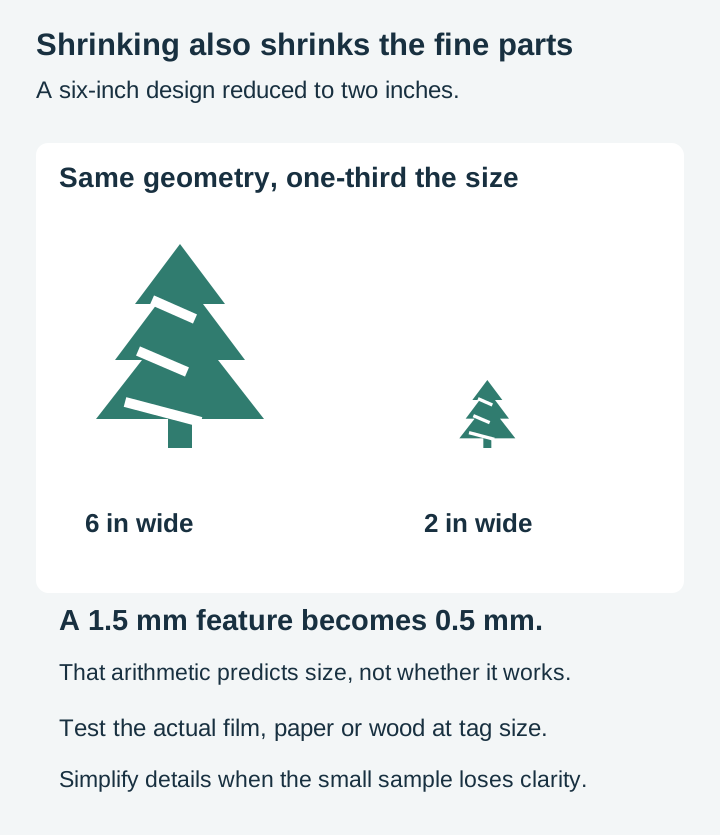
Scaling is uniform. Shrink a design to a third of its size and every stroke, every gap, every gingerbread man's eye shrinks to a third as well. A 6 inch sign design with a comfortable 1.5 millimeter thinnest stroke becomes a 2 inch tag with a 0.5 millimeter stroke. Whether a half-millimeter feature survives depends on the process, stock and settings. Engraved marks can blur together, through-cut strips lose width to kerf, and small vinyl pieces can be difficult to weed. Test the design at its intended size.
This works in one direction only. A tag design blown up to sign size looks clean and slightly empty, which is easy to fix by adding a border or a saying. A detailed sign may need simplification before it works at tag size. Our guide to how much SVG detail survives at small sizes goes into the numbers, and it is worth reading before you buy anything seasonal.
Practically, that means you should decide your product list before you decide your bundle. Twelve ornament designs you can actually cut beat a hundred you cannot.
Ornaments: the shape is half the design
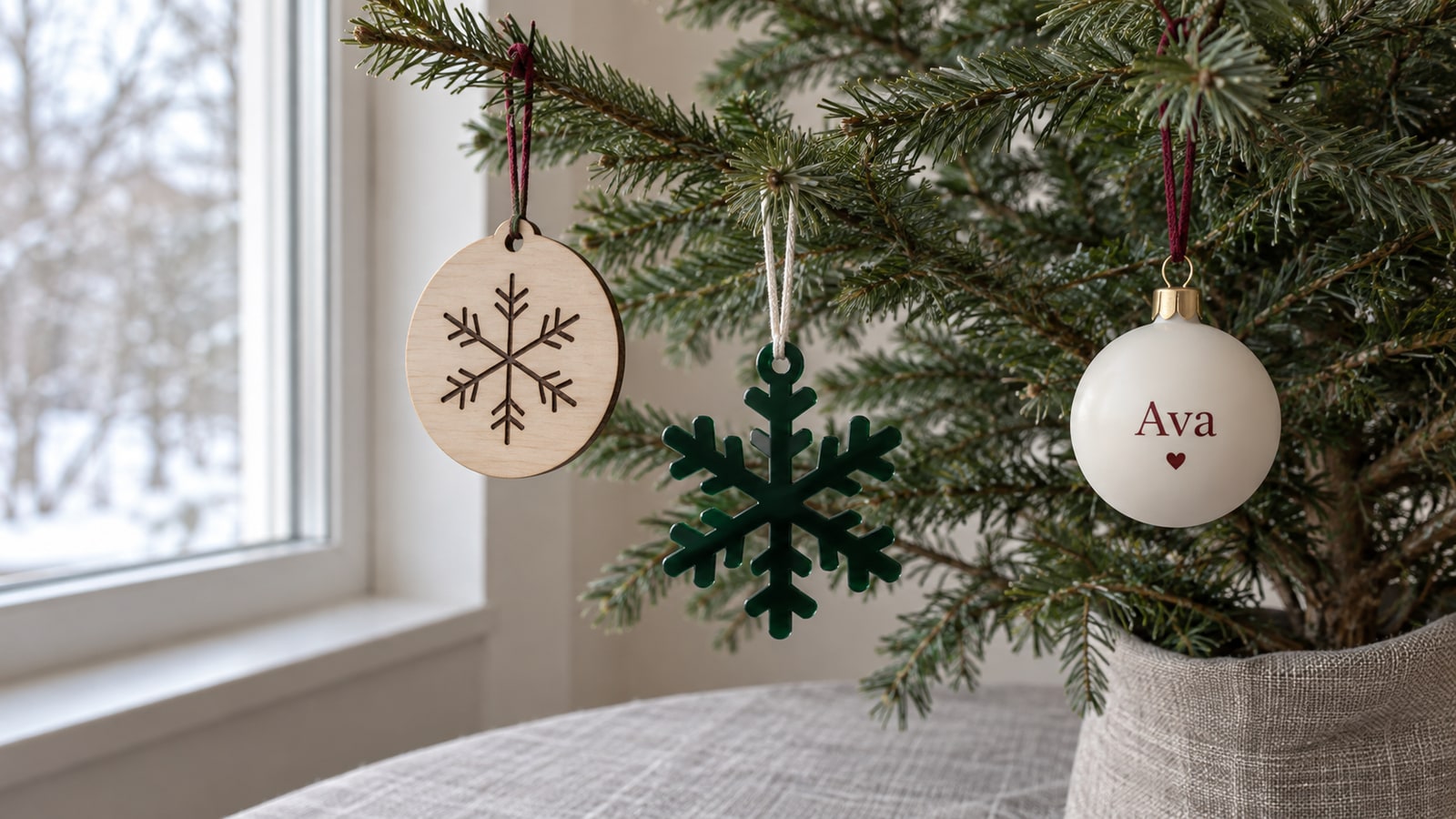
An ornament has constraints nothing else on your bench has. It hangs, so it needs a hole. It is viewed from four or five feet away in dim light on a lit tree, so subtlety is wasted. And it is usually 3 to 4 inches, which is small enough that fine work closes up but large enough that a bold design still reads.
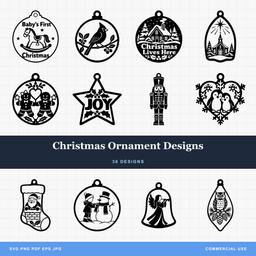
That combination is why ornament designs are drawn differently rather than just scaled differently. Look at our Christmas Ornament Designs pack and every design in it is either square or taller than it is wide. The widest design in the pack sits at roughly 0.96 to 1, and the median is nearer 0.87. Nothing in it is a landscape composition, because a landscape composition on a hanging disc wastes the top and bottom of the blank.
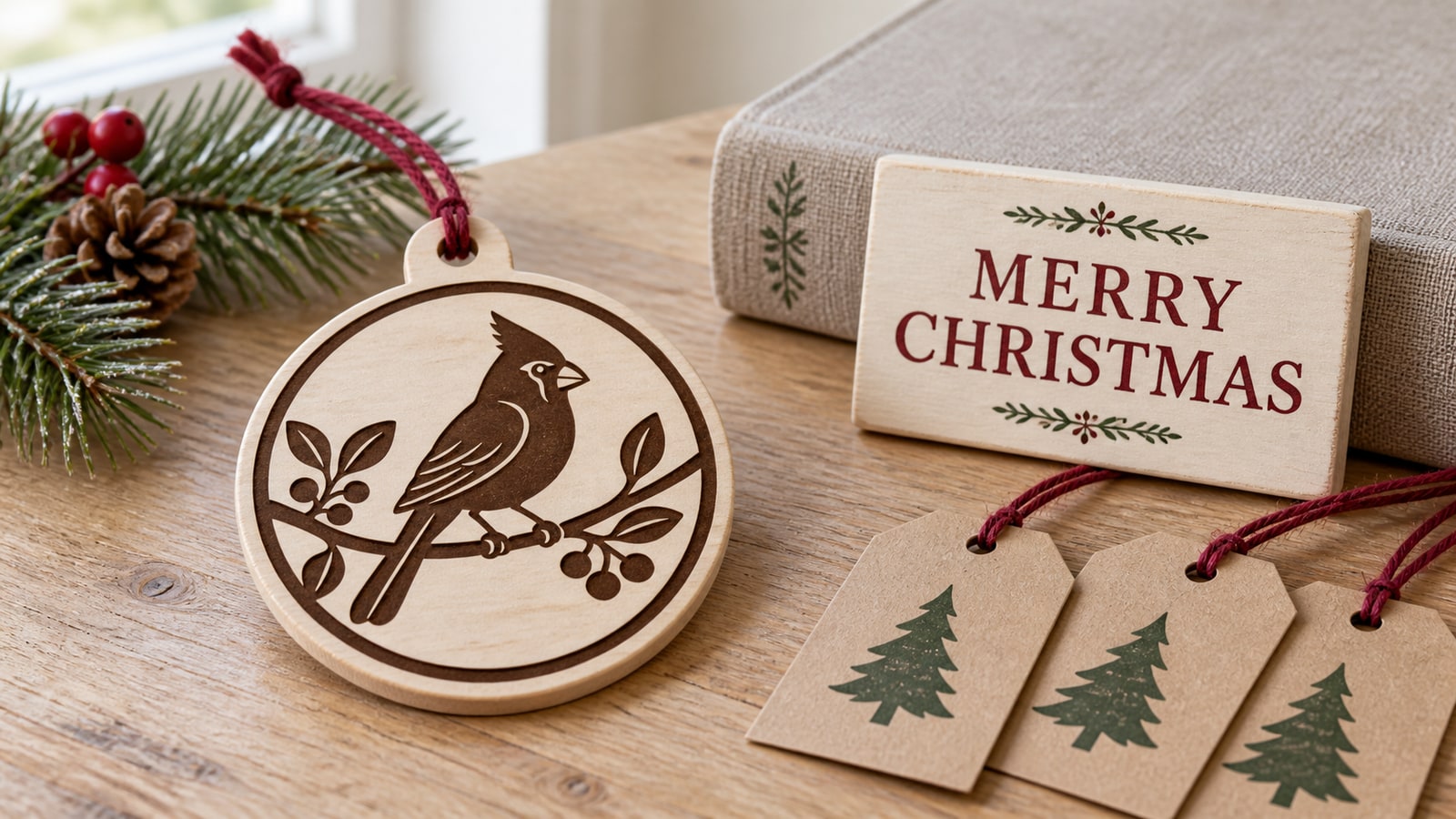
The shape families in that pack are round, oval, teardrop, arch and ring, and the shape is what tells you where the hanging hole goes. Place the hanging hole above the finished piece’s center of mass, with enough retained material for the cord and stock. Some files already contain a loop; decide whether its inner contour is a cut or part of the engraving. A fixed five-millimeter margin does not guarantee strength. Cut and hang one sample before repeating the layout.
One more thing worth knowing about how these files are built. A compound path can contain many subpaths. Inspect the actual file for duplicate contours, islands and the operations assigned to each boundary before cutting. That matters more than it sounds when you are running forty blanks and do not want to discover a doubled contour on piece thirty-one.
 Christmas Ornament Designs38 designs, commercial license included$3.99
Thirty-eight designs, and the range is deliberately spread across the things people actually buy ornaments for: keepsake pieces like baby's first Christmas and our first Christmas, nostalgia pieces like the vintage truck with a tree and the snowy mailbox, and animal pieces like the cardinal, the polar bear cubs and the woodland deer family. The cardinal carries extra weight because of the folk belief that a visiting cardinal is a lost loved one checking in, which is why that design gets asked for as a memorial piece rather than as a bird.
For the making side, materials, layering and finishing, we already have a full walkthrough in DIY Christmas ornaments with your laser or Cricut. This post is about picking the file. That one is about turning it into an object.
Signs and door hangers: the one place detail earns its keep
Signs are the opposite problem, and it is a much nicer problem to have. A door hanger is 16 inches. A mantel sign is 18 to 24. At that size, a design with fine work in it does not just survive, it becomes the reason someone stops at your table.
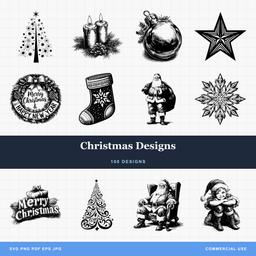
This is where a big general Christmas pack pays off. The 100-design Christmas Designs pack carries the pieces that are far too detailed for a tag and exactly right on a board: the Santa portraits, the sleigh with reindeer, the snow globe village scenes, the ornate swirling trees, the fireplace scene. On a 2 inch tag every one of those is a blob. On a 16 inch round door hanger they look like you paid an illustrator.
The same pack also holds the wide text pieces, and they behave differently again. Designs like the merry christmas marquee and the holly wreath with lettering run up to about 2.7 times wider than they are tall, which is a proportion that only fits a horizontal board. That is useful to know before you cut material, because your blank size follows the design's proportions, not the other way round.
CNC users get an extra reason to shop this pack. Bold silhouettes with clean interior islands are what v-carving wants, and a design with a well defined outline and a few large interior shapes will carve with far less cleanup than one built from a hundred small speckles. Text-led designs sit in the same category, and our notes on why some quote SVGs sell and some sit apply directly to seasonal lettering.
Gift tags: you are not choosing a design, you are choosing a shape
Tags are the sleeper category. They are cheap to make, they sell in fives and tens rather than singly, and they are the thing customers add to a purchase without thinking. They are also the harshest constraint on your bench, for two reasons.
The first is size. A gift tag is 1.5 to 2.5 inches. Everything from the scale section above applies at full force.
The second is volume. You are not cutting one tag, you are cutting two hundred, which changes what "a good file" means. Node count starts to matter because excess tiny segments can increase motion or processing time, depending on the controller and geometry. Interior islands matter because each one is another piece to weed or another cutout to pop out by hand. On card or vinyl, a design with a dozen fiddly interior shapes turns a two hour job into a five hour job, and you will feel every minute of it.
So for tags, go hunting inside the big pack rather than buying something new. The Christmas Designs pack is full of plain single silhouettes that are perfect at tag scale and rather boring at sign scale: the santa hat, the gift box, the stocking, the bell with bow, the crossed candy canes, the gingerbread man, the plain snowman. One shape, one outline, almost nothing to weed. Nest twenty on a sheet and you can run a whole fair's worth of tags in an evening.
Personalization is what turns a tag from a filler item into a reason to buy, and that is where a decorated alphabet comes in.
 Christmas Designs100 designs, commercial license included$3.99
 Christmas Letters And Numbers Design Pack37 designs, commercial license included$3.99
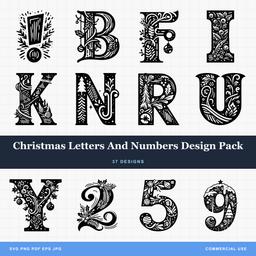
Be clear about what the letters pack is, though, because it is easy to misjudge from the thumbnail. Each character is itself an illustration, wrapped in holly, ornaments, pinecones or a santa hat. That makes it a superb single initial monogram set for a tag or an ornament, and a poor choice for spelling out a whole word, since seven decorated letters in a row fight each other for attention. One letter, big and bold, is the way to use it.
Stockings, mantels and the rest of the fireplace
Stocking decoration splits into two jobs that want different files.
Stocking name tags are the small one: a wooden or acrylic tag on a loop of twine, carrying one name. That is a single initial or a short word, so it is the letters pack again, or a bold silhouette from the main pack with the name added in your own software. Keep it simple, because these are viewed hanging against a bunched fabric cuff and anything busy disappears into the folds.
Heat transfer vinyl onto the cuff itself is the second job, and it is the least forgiving surface in the whole Christmas range. A stocking cuff is thick, often fleecy, and never flat. Check the stocking fabric and HTV instructions before pressing; some fleecy, heat-sensitive or uneven cuffs are unsuitable. A fine line design presses fine and then vanishes into the pile the moment you take the pressure off. Pick the boldest thing you own for HTV, always.
Mantel and hearth pieces sit closer to the sign category: larger, flatter, viewed from across the room. Snowflakes do a lot of work here because they hang, they stand, they scatter across a shelf, and they carry the season without committing to a specific motif. They also stretch further into January than anything with Santa on it, which is a real advantage when you are trying to sell down leftover stock.
Cutting boards, trays and the kitchen gift table
The third pack in this lineup is doing something structurally different from the other two, and it is worth spelling out.
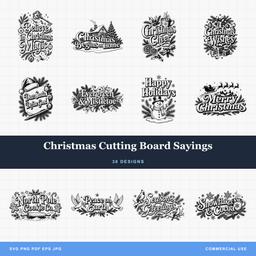 Christmas Cutting Board Sayings30 designs, commercial license included$3.99
These are composed layouts rather than motifs. Each one is a saying already arranged with its own decorative frame, so the lettering, the holly, the bells and the border are drawn to work together at one specific proportion. The median design is about 1.57 times wider than it is tall and the widest runs past 2 to 1, which is exactly the shape of a rectangular cutting board, a serving tray or a horizontal kitchen sign.
That composition is the pack's strength and its limit at the same time. Drop one onto a bamboo board and the layout fills the board properly, with balanced margins, without you nudging elements around for twenty minutes. Try to crop a corner off it for a gift tag and it falls apart, because you are pulling a piece out of a finished arrangement rather than lifting a standalone motif.
The sayings themselves lean into the two things that sell in kitchens: the warm ones like christmas begins at home and christmas memories made here, and the funny ones like dont get your tinsel in a tangle, dear santa define good, and official cookie tester. The funny ones are worth stocking even if they are not your taste, because a board that makes someone laugh gets bought for a friend on the spot rather than deliberated over. Thirty designs, and no two of them need the same board size, so plan your blanks against the specific ones you pick.
The chooser, in one table
These are design-side starting points drawn from how we build files and from the proportions the designs are actually drawn at, not measurements taken off a machine. Your material, your kerf and your settings will shift the edges, so cut one test piece before you commit a sheet.
| What you are making | Typical size | What the design needs | Where to look |
|---|---|---|---|
| Tree ornament | 3 to 4 in | Portrait or round, bold silhouette, room for a hole | Christmas Ornament Designs |
| Door hanger, mantel sign | 12 to 24 in | Detail, scenes, wide text layouts | Christmas Designs |
| Gift tag, bulk | 1.5 to 2.5 in | One shape, few interior islands, low node count | Plain silhouettes in Christmas Designs |
| Stocking name tag | 2 to 3 in | A single decorated initial or one short word | Christmas Letters and Numbers |
| HTV on a stocking cuff | 3 to 5 in | Boldest silhouette you own, no fine lines | Christmas Designs |
| Cutting board, tray | 8 to 14 in wide | A finished landscape layout, not a motif | Christmas Cutting Board Sayings |
| Shelf and window pieces | 4 to 8 in | Symmetrical, hangs or stands, sells into January | Winter Snowflake Designs |
If you are chasing a specific corner of the market
Broad Christmas packs cover the middle of the market well, and the middle is crowded. Three of our packs go somewhere narrower, and a narrow pack is often the easier sale because far fewer people are making that exact thing.
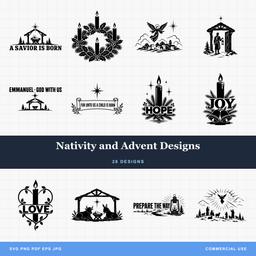 Nativity and Advent Designs28 designs, commercial license included$3.99
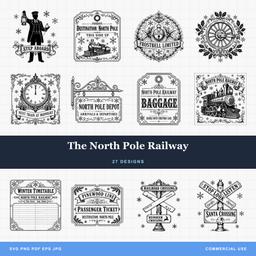 The North Pole Railway27 designs, commercial license included$3.99
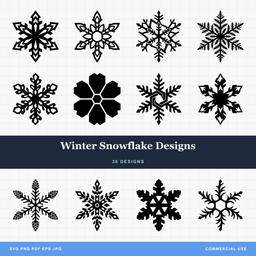 Winter Snowflake Designs36 designs, commercial license included$3.99
Nativity and advent designs serve church fairs and the buyers who want the religious side of the season represented rather than Santa. The North Pole Railway pack is a themed set built around a polar express idea, with boarding passes, luggage tags, station clocks and a locomotive crest, which works as a coordinated gift set for a child in a way single designs never do. Snowflakes are the workhorse: 36 of them, all geometric and symmetrical, but symmetry does not guarantee strong arms or a workable minimum size. Inspect the narrowest retained sections and test them in the chosen material.
Why you are reading this in September and not November
Everything about seasonal making runs earlier than the season. Craft fair applications for November and December events close in September and October. Material orders take a week or two, and you want the wood on your bench before you find out that your favourite ornament design needs 1/8 inch and you bought 1/4. Test cuts take an evening. Cutting two hundred tags takes a weekend you have to find.
The files are the step every one of those waits on, because your material sizes follow the designs' proportions and your blank cutting list follows your product list. Buying files in November means buying material in November, which means making stock the week of the fair.
Nothing about this is urgent yet. That is the point. Pick your products now, buy the packs that match them, cut a test of each design at its real finished size, and you get to spend October making things instead of deciding what to make.
Get your Christmas files sorted
Every pack here is $3.99, includes a commercial license with no cap on the physical products you sell, and ships as SVG, PNG, JPG, PDF and EPS so the same purchase covers a laser, a Cricut and a CNC without a second download. Print-on-demand is allowed too, which is unusual enough to be worth checking against whatever else you have bought this year.
Browse the full holidays collection for the seasonal packs, or quotes and text if signs and sayings are the bulk of what you sell. If your list runs past fifteen packs, the Platinum Club at $59.99 for the year costs less than buying them one at a time, and it covers everything else in the catalogue for the rest of the year rather than just the seasonal ones.
Designs for this project
Christmas Ornament Designs38 designs, commercial license included$3.99Christmas Designs100 designs, commercial license included$3.99Christmas Cutting Board Sayings30 designs, commercial license included$3.99Christmas Letters And Numbers Design Pack37 designs, commercial license included$3.99Winter Snowflake Designs36 designs, commercial license included$3.99Frequently Asked Questions
If I can only buy one Christmas pack, which should it be?
Buy for the product you make most of. If that is ornaments, Christmas Ornament Designs is the safest single purchase, because it is the only one of our Christmas packs where every design is drawn at ornament proportions. If your bench is mostly signs and door hangers, the 100-design Christmas Designs pack covers far more ground, and its plain silhouettes double as gift tags.
Can I use the same Christmas design for a sign and a gift tag?
Sometimes, and the test is simple. Look at the thinnest stroke and the narrowest gap in the design, then work out what they become at tag size. A 6 inch sign scaled to a 2 inch tag has every line at a third of its width, so a stroke that was a comfortable 1.5 millimeters arrives at 0.5 millimeters. Bold single silhouettes survive that. Scenes, portraits and fine cross-hatching do not.
Do the ornament designs come with the hanging hole already in them?
Some designs include a hanging-loop shape, including the cardinal example shown here. Inspect the actual SVG and decide which contours are cut versus engraved. Size and position the real hole for your cord, material, retained edge margin and balance, then test the finished piece.
Is September too early to buy Christmas design files?
It is close to the latest sensible point rather than the earliest. Material orders, test cuts and craft fair stock all have to happen before the fair, and fair applications for November and December events usually close in September and October. Buying the files is the step everything else waits on.