Walk into any pet gift shop and you will find nine hundred dog things, a respectable shelf of cat things, and absolutely nothing for the person keeping four ball pythons in a rack in the spare room. Reptile keepers are used to it. They buy their supplies from specialist shops, they trade animals at expos, and they decorate their reptile rooms with whatever they can improvise.
That gap is the whole opportunity. Reptile people buy reptile things, enthusiastically, and hardly anyone is making them. A keeper with a collection needs labels for every enclosure, and would rather have a nice one than a strip of masking tape with a Sharpie scrawl on it. Reptile SVG designs turn that into a product line you can cut in an afternoon.
What keepers actually need made
Start with the reptile room itself, because that is where the unmet demand sits.
Enclosure and rack labels. Anyone running more than a couple of animals is tracking species, morph, sex, and hatch date per enclosure. Engraved acrylic tags or cut vinyl labels on the glass are a real upgrade over tape, and they are small, fast, and cheap in materials.
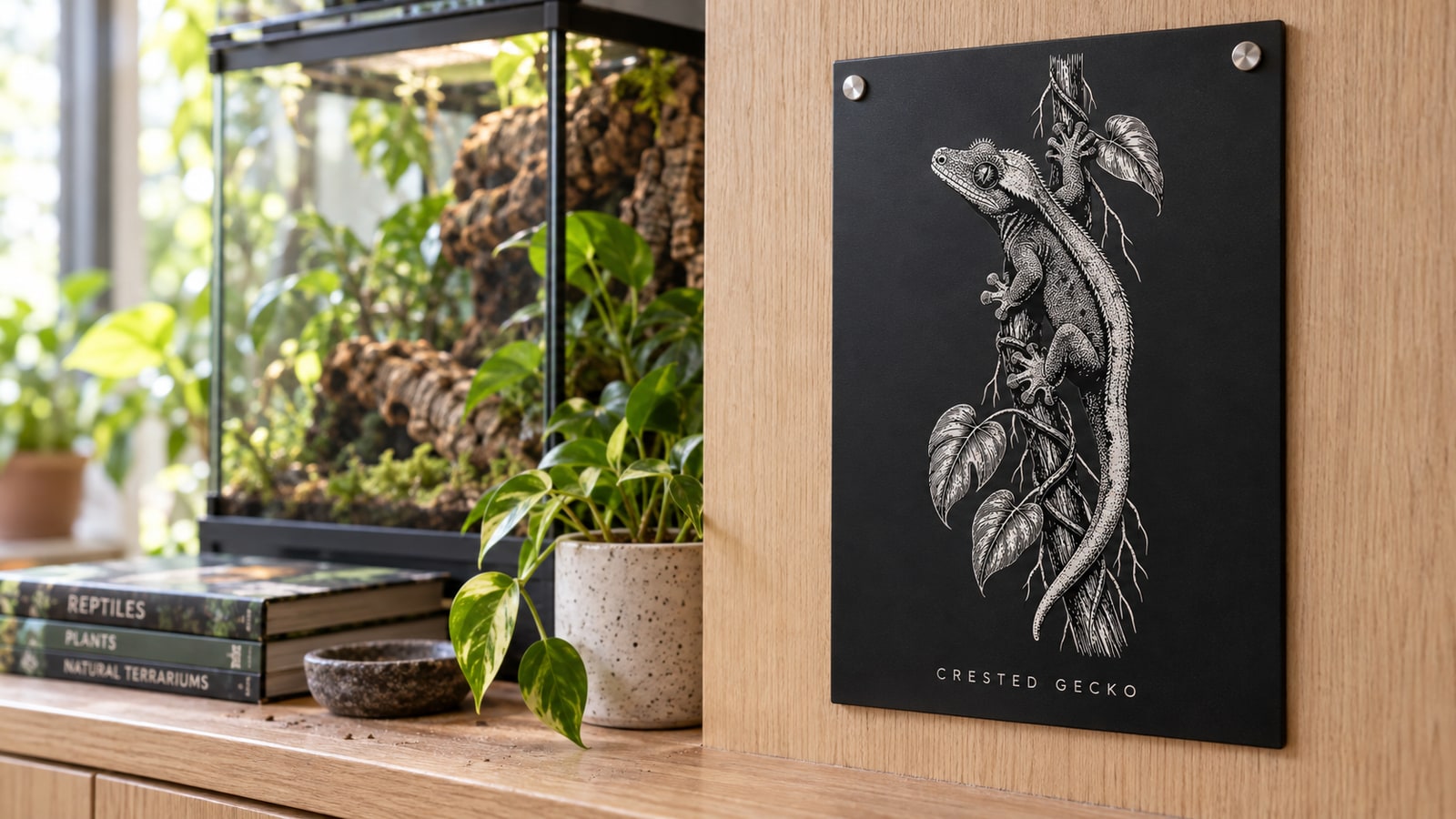
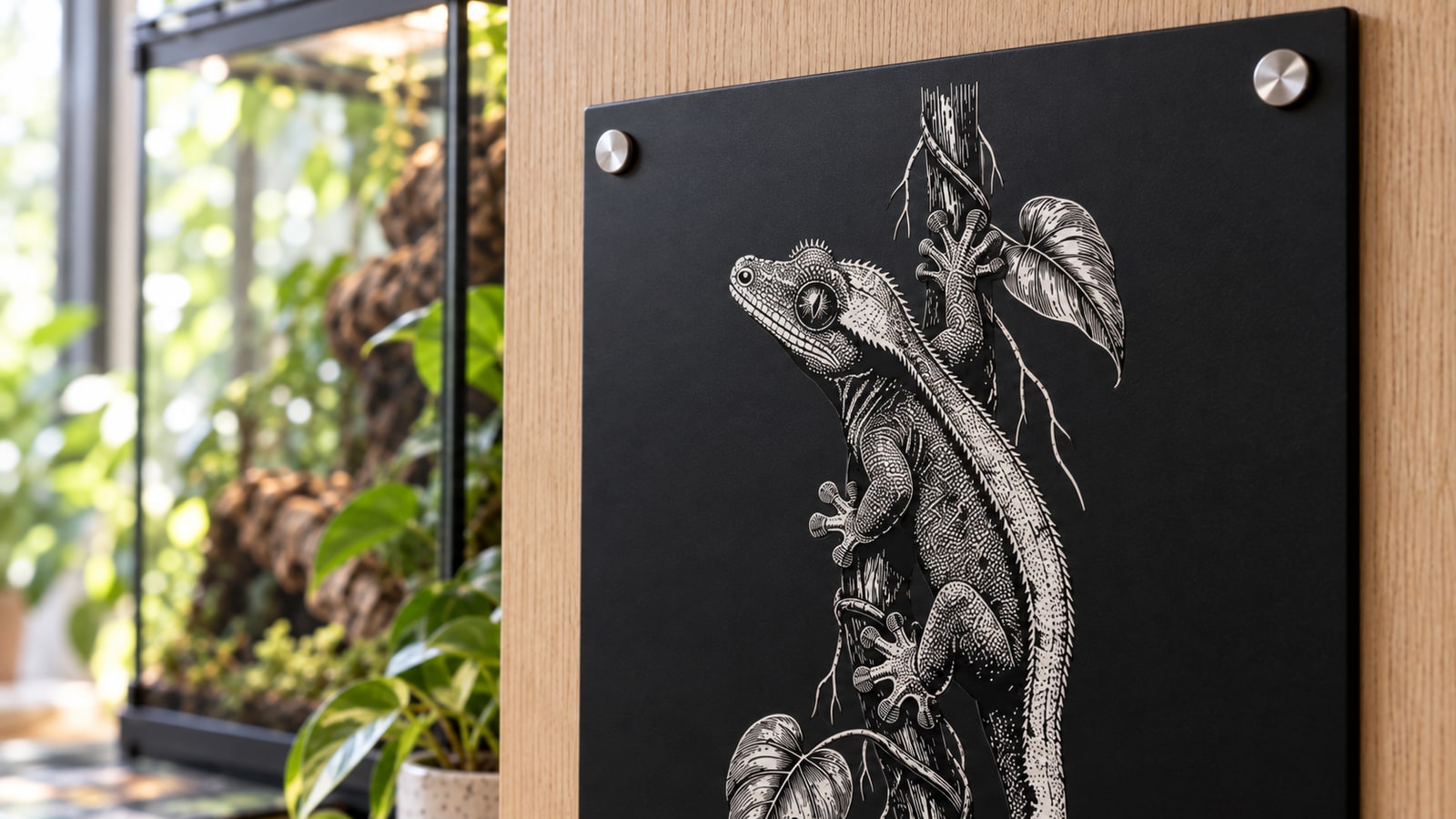
Species plaques. A single animal on a wooden plaque, hung beside the enclosure or on the wall of the room, is the display piece version of the same idea. This is where the detailed designs earn their keep, because a plaque has the surface area to show them.
Feeding and husbandry boards. A wooden board with a slot per animal, or an engraved panel to write on, solves a genuine keeper problem: remembering who ate last week and who is in shed.
Expo and table signage. Breeders selling at expos need banners, price cards, and table signs. A breeder who is good with animals is usually not set up to make signage, which is a nice little side market if you are.
Gifts, and the herp-person merch problem. Decals, tumblers, shirts, and keychains with a specific species on them. The buyer is rarely satisfied with a generic lizard. They want their species.
Snakes
Snakes are the biggest keeper population and the most demanding designs to work with, which is a useful pairing to understand before you cut anything.
Coiled and striking compositions are the two shapes that read instantly. A tight coil fills a circle beautifully, which makes it the natural choice for coasters, round plaques, and rack tags. A striking pose wants width and works on a horizontal sign.
Our Cobra Designs pack leans into the hood, which is the single most recognisable silhouette in the whole category and reads at any size. The Python Designs pack is the one aimed squarely at keepers, since ball pythons and reticulated pythons make up an enormous share of the animals people actually own.
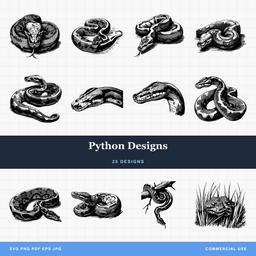 Python Designs25 designs, commercial license included$3.99
There is also a stylised route worth knowing about. The Tribal Reptile Designs pack redraws snakes and lizards as bold interlocking shapes rather than realistic bodies, which sidesteps the texture problem entirely and suits vinyl on tumblers and car windows.
Geckos and lizards
Geckos are the friendliest subject in the category from a design point of view. The body outline is distinctive, the splayed toes give the silhouette character, and even a simple version is unmistakably a gecko rather than a generic lizard shape.
The detail that separates a good gecko design from a lazy one is the toes. Many climbing geckos have adhesive toe pads with fine structures underneath, but leopard geckos lack those pads. Match the feet to the species instead of giving every gecko the same splayed pad shape. It is also, predictably, the first thing to disappear when the design gets small.
Gecko and Lizard SVG Designs covers crested geckos, leopard geckos, and bearded dragons, which between them account for most of the lizards in captivity. Beardies deserve their own mention: the spiky beard and the row of lateral spikes give a strong, chunky outline that cuts well in vinyl even at small sizes.
Frogs: Amphibians in the Same Keeper Community
Frogs are the sleeper hit. Dart frogs in particular have a following that behaves more like an art market than a pet market, because the animals are small, brilliantly coloured, and kept in planted vivariums that people genuinely decorate around.
From a file perspective frogs are the easy ones. A frog is mostly big smooth mass with a strong outline and a couple of clear interior shapes for the eyes and the leg fold. That is close to ideal for vinyl, for layered designs, and for anything small. The Frogs Pack covers tree frogs, dart frogs, and the classic sitting pose that works on almost any product shape.
Layering is where frogs get fun. A dart frog cut as two or three vinyl layers, black body over a bright yellow or blue base, produces something that looks nothing like a single-colour decal for maybe two extra minutes of work.
The thing that ruins reptile files
Here is the craft point that matters more in this category than in any other we draw for.
Scale texture can use separate shapes, enclosed gaps or linework. Inspect which areas remain and which are removed for your chosen operation. Small retained pieces can lift or break, while engraved marks can widen and reduce nearby contrast.
Heads up
Shrink a scaled snake body far enough and the gaps between scales close up. The pattern does not get finer, it disappears, and you are left with a dark mass in the shape of a snake. Scale the design to the piece before you decide the design is bad.
What that looks like on each process differs, and it is worth knowing which failure you are about to hit. The notes below come from how we build the files rather than from any measurement, so treat them as a starting point and cut a test piece on your own material.
| Design style | Cuts and engraves well on | Gets difficult with |
|---|---|---|
| Bold silhouette, no interior texture | Vinyl, small tags, keychains, ornaments | Narrow toes, tail tips and unsupported pieces |
| Suggested scales drawn as strokes | Medium plaques, tumblers, engraved acrylic | Very small vinyl, where strokes still thin out |
| Fully scaled body, every scale outlined | Large engraved plaques and panels | Dense weeding or marks too fine for the process |
| Fine gecko toe and lamellae detail | Wall pieces, larger engravings | Fine marks and gaps at the intended output size |
Vinyl can make texture slow to weed, although some gaps join into one connected waste area. Count the enclosed pieces in the actual file instead of assuming every scale creates a separate pick. A fully scaled python body can be a few hundred individual picks. That is not impossible, it is just an evening, and you should know that before you press cut rather than forty minutes in. Our guide to weeding vinyl covers the order of operations that makes detailed designs survivable.
The other trap is node count, and it usually arrives when someone auto-traces a reptile photo. A trace does not know what a scale is. It puts nodes along every ripple of every scale edge, and a file that should be a few thousand nodes arrives as tens of thousands. The symptoms are familiar: cutting software that takes forever to load the file, previews that lag, and cut paths that stutter around curves. If that sounds like a file you already have, too many nodes walks through thinning it out. For sizing decisions more broadly, detail on small items covers what survives and what closes up.
Inspect the selected pack to see whether it contains a suitable bold or detailed treatment. Simplifying texture changes the artwork; resizing alone does not create a bold version.
If you do need to bring your own artwork into the mix, our sister site Craftgineer has MonoTrace, a free tool that vectorises an image into cutting-ready paths. It needs a free account, and it will still give you a lot of nodes on a scaly subject, so plan on cleaning up afterwards.
Selling into the reptile community
Two things distinguish this niche from general pet gifts.
The first is that species specificity is the entire product. A crested gecko keeper does not want a lizard. They want a crestie, with the crests. Getting the animal right is what turns a browser into a buyer here, and it is why offering ten species beats offering one design in ten colours.
The second is that morph names are a language. Ball python keepers talk in pastels, bananas, and pieds. Offering the animal plus a personalised name or morph on the piece is a small amount of extra work per order and a large amount of extra perceived value. Keepers name their animals and they will pay to see the name on something.
Reptile expos are the obvious sales channel, and they run all year rather than clustering around a season, which makes this a steadier niche than most. Online, keepers gather in species-specific groups and forums, and a maker who genuinely knows the animals gets a warmer reception there than one who clearly does not.
Where to start
Pick one animal you can already identify on sight and build a small range around it: a decal, a keychain, an enclosure tag, and one wall piece. That is four products from one design set, and it gives you something coherent to show rather than a scattering of unrelated items.
Every pack in our reptiles and bugs collection is $3.99 and ships as SVG, PNG, JPG, PDF, and EPS. A commercial license comes with every purchase, with no cap on how many physical products you sell, and print-on-demand is allowed too, so a gecko design can go on a shirt through Printful as easily as onto a plaque in your workshop.
For the ones nobody keeps in the spare room, Alligator and Crocodile Designs covers the swamp and gator-country side of the same category, which sells to an entirely different buyer in an entirely different part of the map.
Designs for this project
Python Designs25 designs, commercial license included$3.99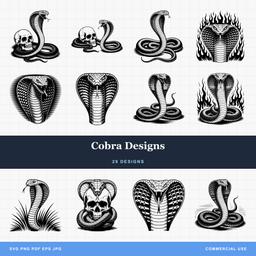 Cobra Designs29 designs, commercial license included$3.99
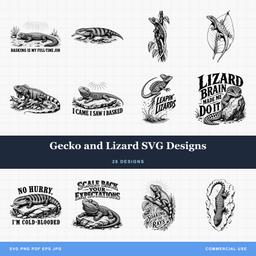 Gecko and Lizard SVG Designs28 designs, commercial license included$3.99
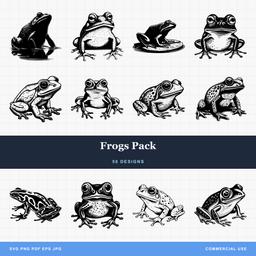 Frogs Pack50 designs, commercial license included$3.99
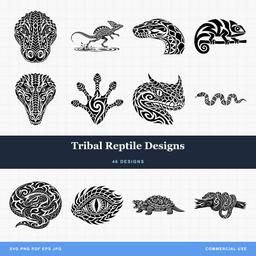 Tribal Reptile Designs46 designs, commercial license included$3.99
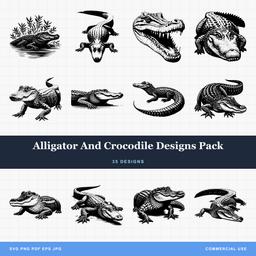 Alligator And Crocodile Designs Pack35 designs, commercial license included$3.99
Frequently Asked Questions
Will a detailed snake design still read on a small enclosure label?
Often not. Scale texture is made of many small shapes separated by thin gaps, and it is the gaps that have to survive, not the scales. Shrink the design far enough and those gaps close, leaving a dark blob where the pattern was. For labels and other small pieces, pick the bolder silhouette version of the design and save the fully scaled body for a large plaque.
Can I cut reptile designs in vinyl for a glass terrarium?
Yes, and frogs and bold lizard silhouettes are the easy ones because they are mostly solid mass with a strong outline. Heavily scaled snake designs are the hard ones, since every gap between scales becomes a separate weeding pick. Check the design in your software before you cut and count how much tiny negative space you are signing up to remove.