An ornament is a small round object that somebody looks at closely, once a year, for about twenty years.
That combination is unusual. Small enough that detail is fragile, personal enough that people keep them for decades, and seasonal enough that you make them all in a narrow window. The material you choose changes all three of those things.
Tip
Short answer: wood is the default for good reasons and reads as handmade. Acrylic gives you light, colour and translucency that wood cannot. Slate inverts the mark, so designs come out pale on dark instead of dark on light. Pick the material first, then pick a design that suits it, rather than the other way round.
Ornaments are a size problem before they are a material problem
Worth saying before any of the comparison, because it is the thing that actually goes wrong.
Most ornaments end up somewhere around coaster size. That is small. A design that looks beautiful at the size you are viewing it on screen has to survive being reduced to something you can hang on a branch, and a lot of them do not.
The failures are consistent. Fine internal lines merge into a grey smear. Small enclosed areas close up. Thin connecting sections become fragile enough to break during finishing or packing. Text becomes unreadable.
So the first question is never which material. It is whether this design still reads at ornament size, and our post on detail and small items covers making that judgement.
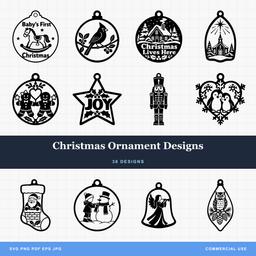 Christmas Ornament Designs38 designs, commercial license included$3.99
Wood
The default, and deservedly.
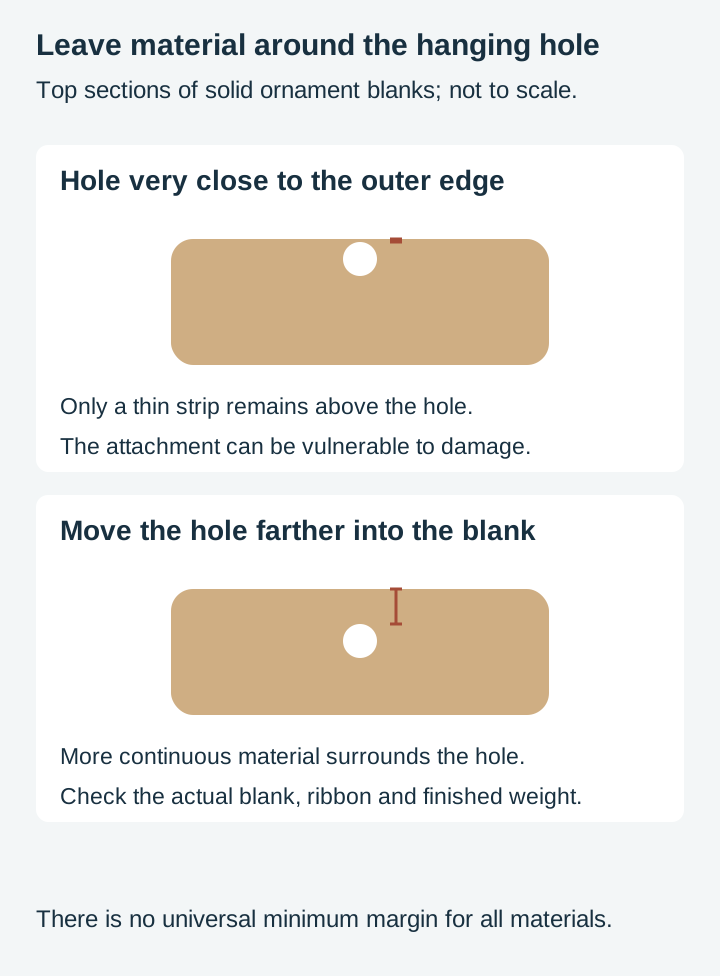
Birch-faced plywood is close to the standard material for this in the hobby, and the reasons are practical rather than sentimental. It is cheap enough to make a hundred without flinching. It engraves to a warm dark brown that reads clearly against the pale face. Suitable stock can cut cleanly with tested settings. Keep enough material around the hanging hole and inspect its edge. And it looks handmade, which is what somebody buying a handmade ornament actually wants.
What it does to a design. Engraving darkens, so your design reads dark on light. That suits line work, silhouettes, and lettering. Large solid filled areas are possible but slow, and they show every inconsistency in the face veneer, which on a small piece is quite visible.
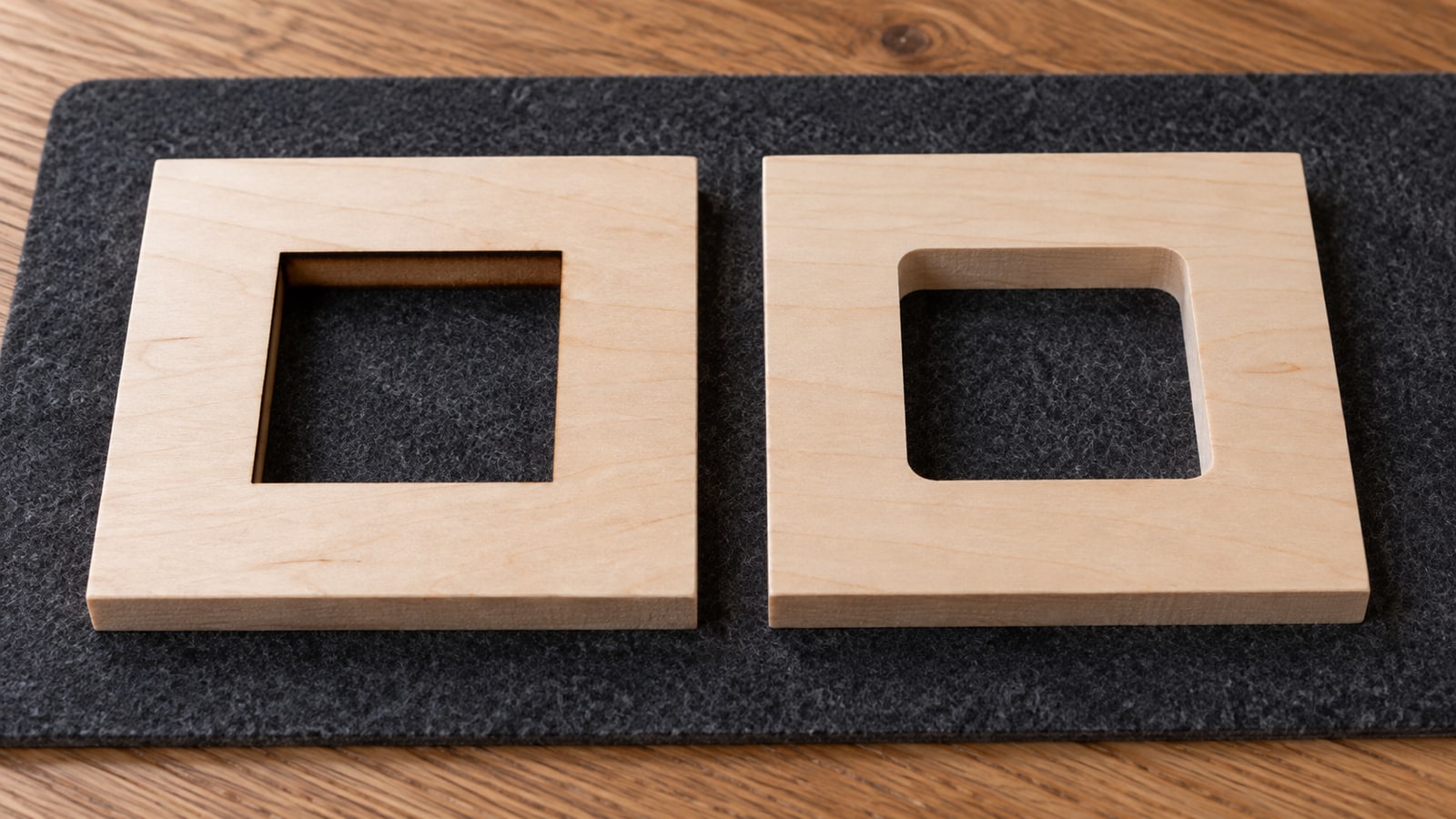
What to watch. Voids in cheaper plywood are a bigger problem at ornament scale than at sign scale, because a small piece has less material to spare. Our materials comparison covers grades.
Solid hardwood ornaments offer a different grain and feel, and can be worth testing as another option in your range. Walnut and maple both photograph beautifully, and a solid wood ornament feels different in the hand in a way people notice.
Acrylic
The one that does something wood cannot.
Clear, translucent and frosted acrylic all interact with light on a tree rather than just sitting on it, which is the property wood cannot offer. Opaque and mirrored sheet behave quite differently, so the finish you buy matters as much as the material. Frosted and coloured acrylic catch and scatter the light from the bulbs around them, and a cut-through design in clear acrylic reads completely differently from the same design in plywood.
What it does to a design. Cut-through work is where acrylic earns its place, because the openings become part of the light. Engraving behaves differently by type: cast acrylic is the one that gives the frosted white mark people picture, reading as a soft white design floating in something almost invisible, while extruded tends to engrave clear rather than frosted.
What to watch. Acrylic is more brittle than plywood. Thin connections, narrow bridges, and delicate internal lacework that survive comfortably in wood can crack in acrylic, either during the cut or later when somebody handles it. A design that works in one is not automatically safe in the other.
There is also more than one kind of acrylic, and they behave differently under a laser. That is a genuine consideration rather than a detail, and our acrylic guide covers the material properly.
Follow your supplier’s guidance for the exact acrylic and laser. Clear acrylic generally needs a compatible CO₂ laser; common blue diode lasers transmit through clear stock rather than processing it effectively. Do not assume a file that worked on wood makes the machine suitable for clear acrylic.
Slate
The one people forget about, and the most visually distinctive of the three.
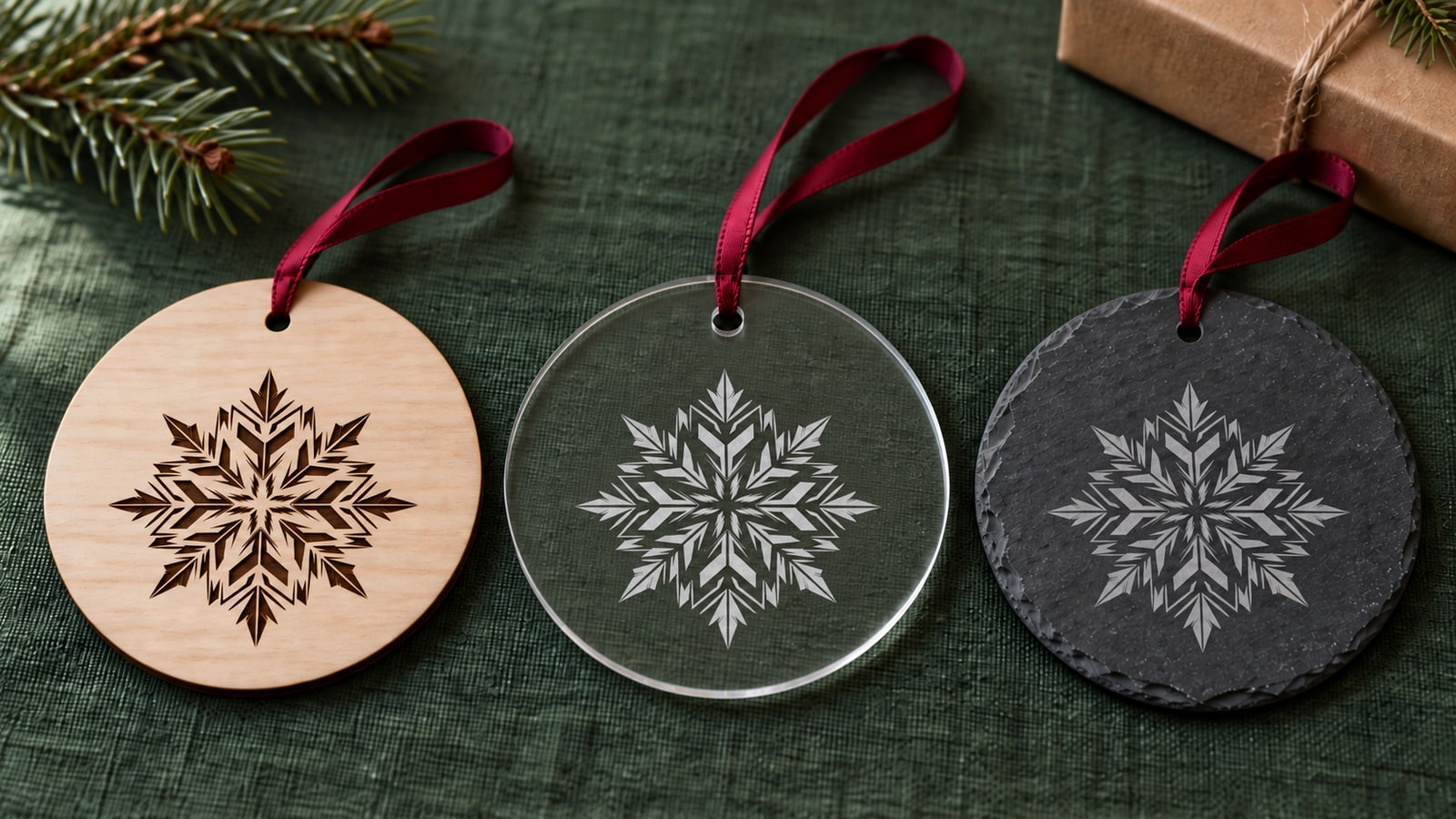
Slate inverts everything. On wood, engraving darkens the surface and a design reads dark on light. On slate the mark comes out pale against the dark face, so the design reads light on dark. Suppliers describe it as a surface matting effect with very little material actually removed, rather than cutting down into a lighter layer beneath, but the practical result is the same inversion.
What that changes. A design drawn to be a heavy dark shape on pale wood becomes a heavy pale shape on dark stone, which is a genuinely different object. Snowflakes are the obvious winner: a pale frosted snowflake on dark slate looks like the thing it is depicting in a way it never does on wood. Anything that wants to read as light, frost, or stars suits slate for the same reason.
What to watch. Slate is heavy, and a slate ornament pulls on a branch harder than a wooden one. It is also naturally variable in thickness and surface, and it can chip. Making your own hanging hole in stone is a different proposition from doing it in plywood, which is why slate ornament blanks are commonly sold with the hole already drilled. Predrilled blanks avoid that extra fabrication step. Typical craft lasers mark slate rather than cut its outline or drill its hanging hole.
Our slate engraving guide covers the material properly.
The comparison
The notes below are a design-side starting point drawn from how we build files and what the materials are, not measurements from machines we own. Suppliers publish guidance for their own products, and that is the right source for processing. Test before a batch.
| Wood | Acrylic | Slate | |
|---|---|---|---|
| Mark reads | Dark on light | Frosted pale, or cut through | Pale on dark |
| Best design type | Line work, silhouettes, lettering | Cut-through openings, layered colour | Anything meant to read as light |
| Fragility | Forgiving | More brittle, watch thin bridges | Chips, and is heavy |
| Hanging hole | Check edge margin and grain | Check margin and cracks | Use sound predrilled blanks |
| Appearance | Grain and warm tones | Clear, frosted, colored or opaque | Natural dark stone with pale marks |
| Cost per piece | Compare grade, thickness and processing | Compare sheet type, finish and processing | Compare blank, hole and shipping cost |
Cost varies with thickness, supplier, finishing, waste and processing time; price the actual blanks you intend to use. The row worth thinking hardest about is the first, because it decides whether a given design will work at all. A design built around a dark heavy motif is a different piece on slate, and not always a better one.
Making a season's worth
A practical note, since ornaments are the most seasonal product in this whole catalogue.
They sell in a compressed window, which means the making has to happen before it. Cutting in November for a December market means spending the selling season making instead of selling, and running out with three weeks left.
Ornaments are unusually good for batching because they are small, they nest tightly on a sheet, and one design produces many identical pieces. That makes them the natural candidate for a production run rather than one-off work.
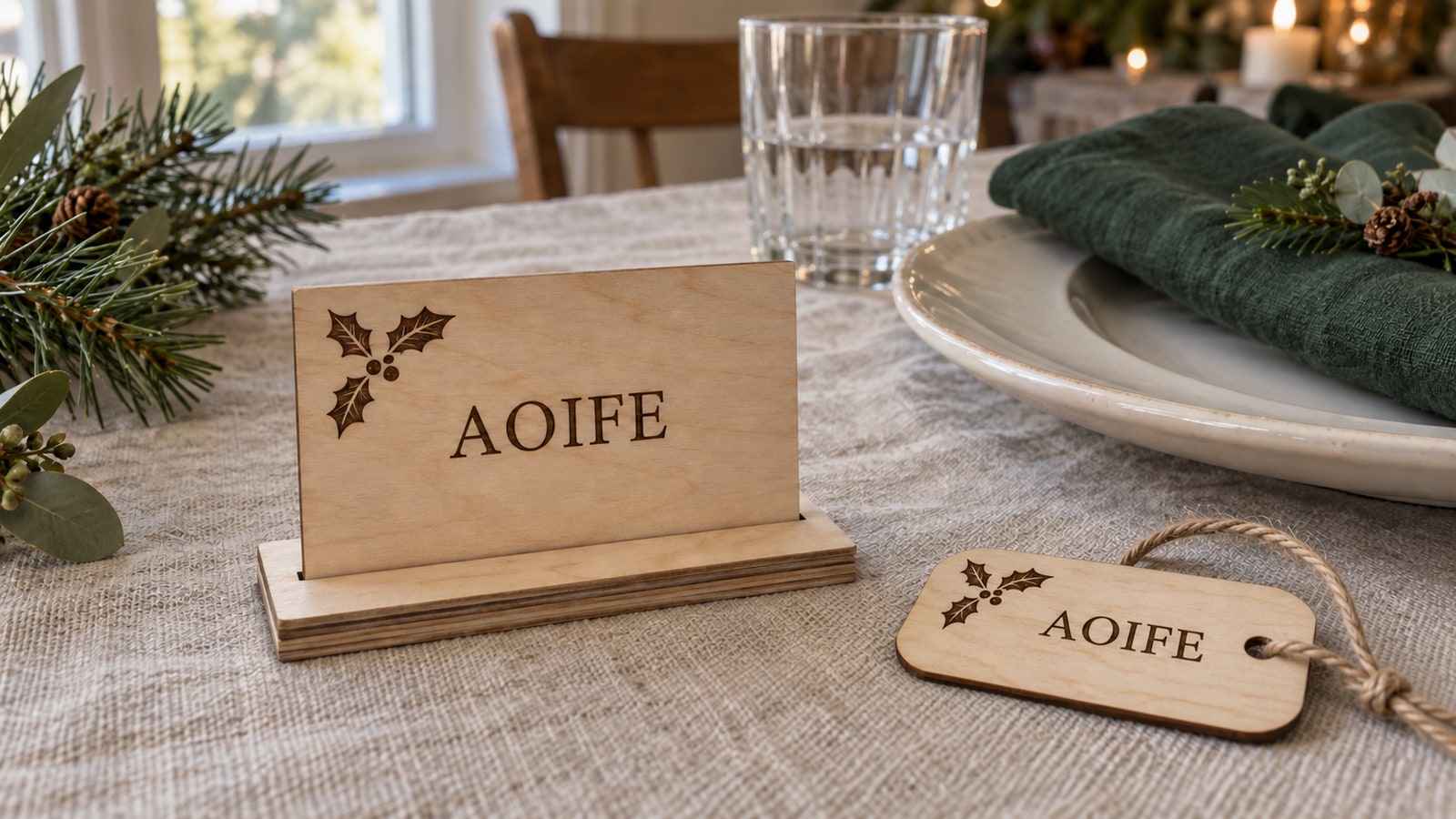
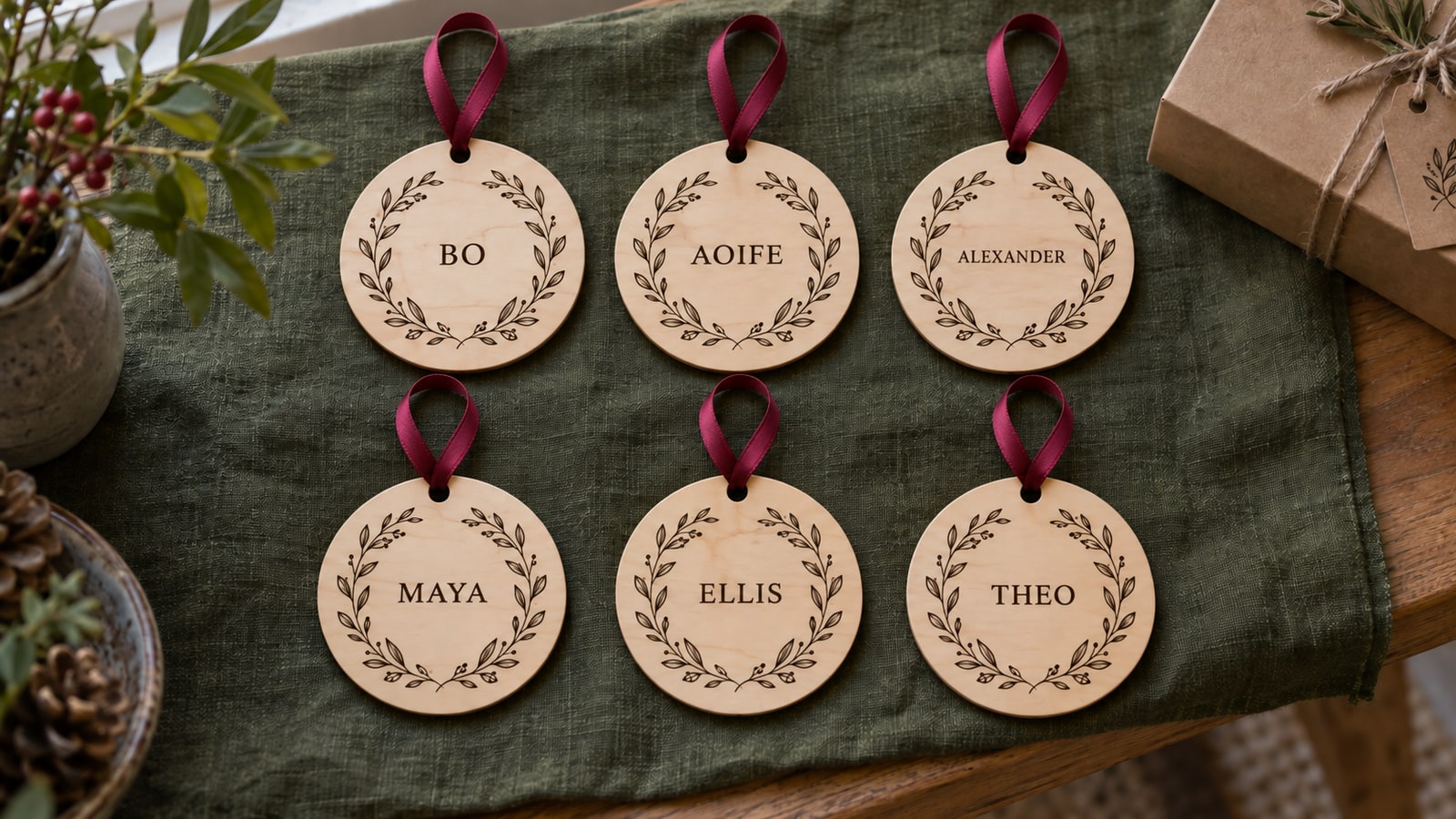
Personalised ones are the exception and they are also where the margin is. A name and a year turns a decoration into a keepsake, and people buy those every year for a growing family. That is a custom workflow with a deadline attached, so it needs the names confirmed in writing and a cut-off date you actually hold to.
 Christmas Designs100 designs, commercial license included$3.99
Where to start
Make the same design in birch plywood and in slate, and hang them next to each other. The inversion is difficult to imagine and immediately obvious in the hand, and it will tell you more about which designs suit which material than any amount of planning.
Then decide what you are making in volume before November, not during it.
Every pack is $3.99 and ships as SVG, PNG, JPG, PDF, and EPS, so one purchase covers the wooden ornament, the acrylic version, and the sublimated matching mug. The commercial license is included with every purchase with no cap on how many physical products you sell.
Browse the holidays collection for the rest of the season.
Designs for this project
Frequently Asked Questions
Which ornament material is best for a beginner?
A thin birch plywood specified for your laser can be a useful starting point. Check its grade, adhesive, thickness and hole margins. Your machine’s supported materials and supplier guidance take priority over a universal material recommendation.
Why does slate look different from wood?
Because the mark is the opposite way round. On wood, engraving darkens the surface, so a design reads as dark on light. On slate, laser interaction creates a pale surface mark or matting effect, generally with little removal, so the design reads as pale on dark. That inversion changes which designs work: a heavy dark design on wood becomes a heavy pale design on slate.
Can I cut acrylic ornaments with the same file as wood?
The artwork transfers, but the structural decisions may not. Acrylic is more brittle than plywood, so thin connections and narrow bridges that survive in wood can crack in acrylic. Anything with delicate internal detail is worth checking before you commit a sheet.
How big should an ornament be?
Most sit somewhere around the size of a drinks coaster, which can provide room for a readable design. Size alone does not establish safe hanging weight; thickness and material matter too. The real constraint is that the design has to stay legible at that size, which is where most ornament designs actually fail.