There is a difference between a farm and a homestead, and the people in the second category know it precisely.
A smallholding might have a few goats, pigs or sheep whose names and personalities matter to their owners. Those individual animals provide a useful starting point for personal gifts and practical signs. Test the audience locally rather than assuming a market size or growth rate.
Tip
Short answer: four animals, four different cutting problems. Simplified pigs can offer broad connected shapes, detailed fleece often suits engraving, and goat horns or donkey ears may need wider joins or a backing. Match the treatment to the animal.
Four animals, four structural problems
This is the part worth knowing before you pick a file, because these subjects behave very differently from each other despite living in the same barn.
Pigs are the easy one
A pig is close to ideal for a cut file and it is worth understanding why, because it explains everything about the others.
The body is a rounded solid mass. The legs are short and thick. The ears are small and sit close to the head. The tail is the only thin feature and it is short. Those features can be drawn compactly, but a thin curled tail or delicate legs still need a final-size check.
That makes a pig silhouette one of the more robust shapes in the whole farm animal category. A simplified version can be worth testing at charm size. The actual outcome depends on retained shapes, gaps, material and machine settings.
Sows with piglets are worth calling out separately. A mother-and-young composition sells to a different buyer than a single animal does, and it is one of the reliably popular framings in this whole category.
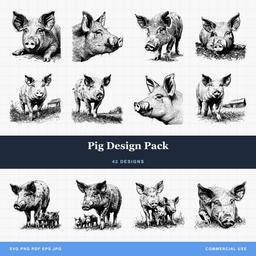 Pig Design Pack42 designs, commercial license included$3.99
Sheep are an engraving subject
Sheep are the opposite problem, and it is entirely about fleece.
What makes a sheep read as a sheep, rather than as a small pale dog, is the texture of the wool. That texture is fine, irregular, and covers most of the animal. Engraved, it is lovely and it is exactly what the detailed files in this category are drawn for.
A cut version needs a different treatment. Suggest fleece with broad outer scallops rather than trying to preserve every drawn curl as a separate piece.
The honest resolution is to pick one. For engraving, use the detailed version and let the texture do the work. For cutting, use a simplified silhouette with a suggestion of fleece in the outline and accept that it is stylised. Trying to cut the detailed version is where people lose an afternoon. Our post on low detail versus high detail designs covers that trade generally.
Ewe and lamb pairs carry the same gift appeal as sows with piglets.
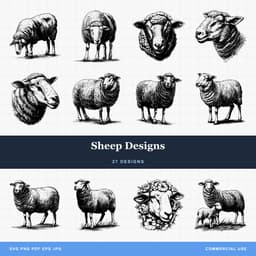 Sheep Designs27 designs, commercial license included$3.99
Horned goats need supported projections
Goats are the most characterful animals in this group and they carry a specific hazard.
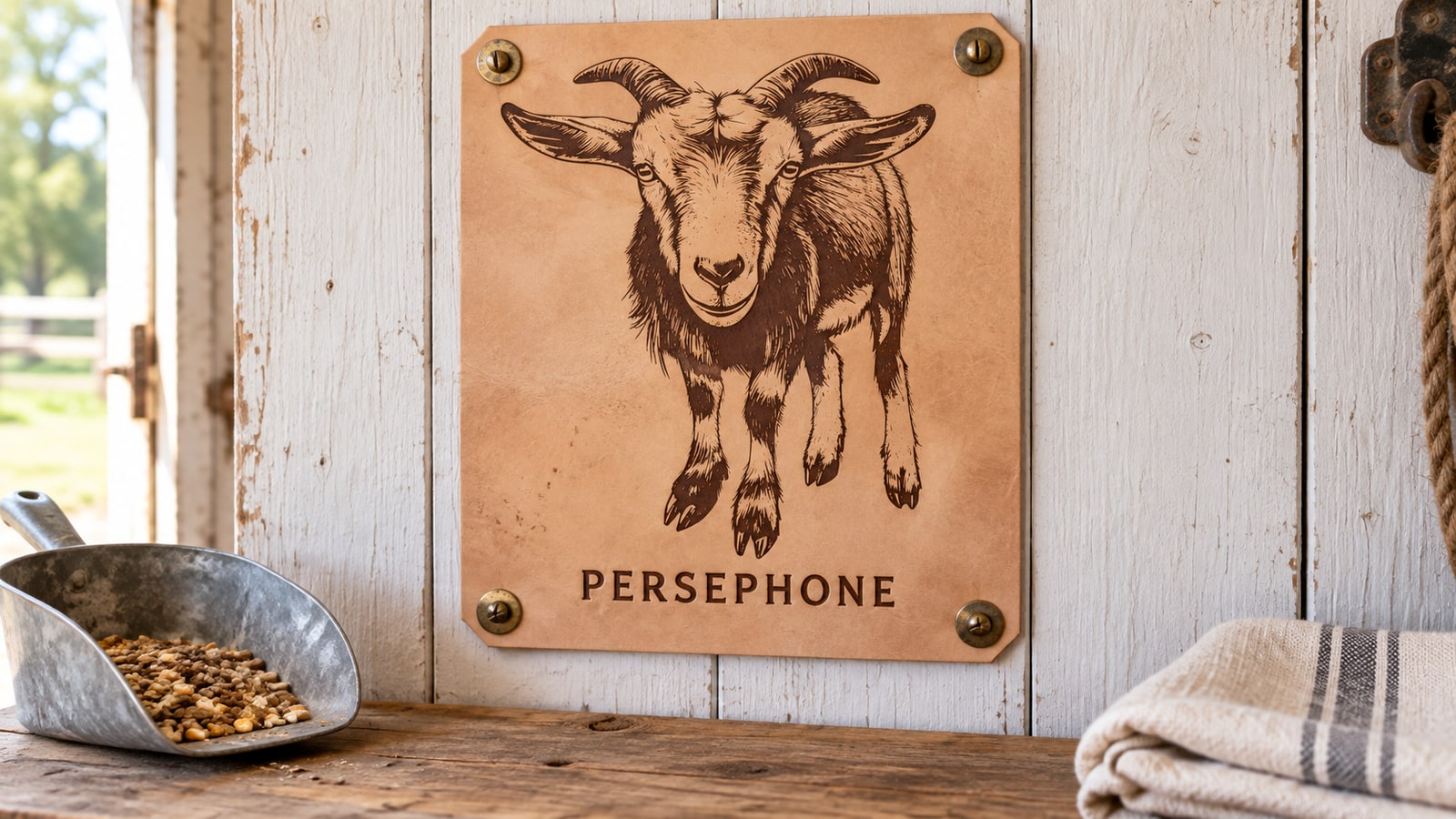
Horns project away from the head and taper toward the tip. A real goat's horns are thick where they meet the skull, but a stylised silhouette usually thins them all the way down, and the tip is narrow regardless. That is the geometry that fails: a long tapering projection whose end has almost no material in it. A larger wall piece gives more room for wider joins, while small exposed horn tips can be vulnerable during handling.
The other goat-specific feature is that they are frequently drawn standing on something. Goats on stumps, goats on rocks, goats where they should not be, which is true to life and gives the composition a base to sit on. That base is structurally useful, since it gives the design a wide bottom edge.
The fix for horns is deliberate thickening rather than accuracy. A goat with slightly heavier horns than nature provided still reads as a goat. A goat with anatomically correct horns and no horns left after weeding does not.
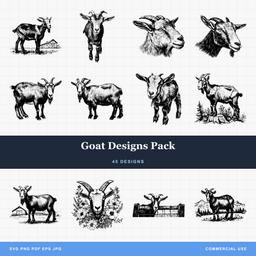 Goat Designs Pack45 designs, commercial license included$3.99
Donkeys are ears
Same problem as goats, in a different place.
The ears are the identifying feature and they are long, narrow, and often drawn upright and separated. That is two thin parallel projections at the top of the design with a gap between them, which is fragile in almost any material at small sizes.
The head studies in this category are frequently drawn against a fence or a barn silhouette, and that is not just composition. A background element helps only when the material actually joins the ears or provides a solid backing; simply appearing behind them in a drawing is not enough. A real connection turns two unsupported spikes into part of a solid shape. It is a good example of a design solving a cutting problem through composition rather than through thickness.
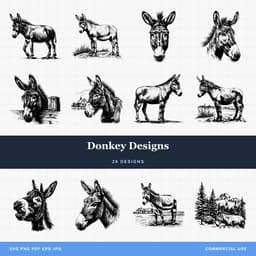 Donkey Designs28 designs, commercial license included$3.99
Matching treatment to job
The notes below are a design-side starting point drawn from how we build these files rather than results measured on machines we own. Test on your own material before committing to a batch.
| Animal | Identifying feature | First thing to fail small | Best treatment |
|---|---|---|---|
| Pig | Rounded body, snout | Curled tail, legs or small ears | Simplified cuts, detailed engraving or print |
| Sheep | Fleece texture | Texture turning to noise | Engrave detailed, or cut simplified |
| Goat | Horns, beard | Horn tips and the horn base | Head study, or thicken horns |
| Donkey | Long upright ears | Ear tips, and the gap between ears | Head study with a background element |
The pattern across all four: the feature that makes the animal recognisable is the feature most likely to break. That is true of breed work generally, and it is why farm animal designs fail small more often than a generic silhouette would.
What people make
The homestead buyer decorates specific places, and knowing which ones is more useful than a list of product types.
The barn and feed room. Signs, hooks, stall tags with animal names on them. Practical objects that happen to be decorated.
The kitchen. This is a bigger slice than people expect. Homesteading and home food production overlap almost completely, so cutting boards, bread boards, and kitchen signs all land with the same buyer.
Gates and entrances. A sign at the end of the drive with the place name on it.
Gifts between homesteaders. They know each other, they visit each other's setups, and they buy for each other. This is a word-of-mouth market in the same way the equestrian world is, which our horse designs post covers.
Children's pieces. 4-H and youth livestock programmes put a lot of young people in contact with exactly these animals, and the resulting nostalgia lasts decades.
The name is the product
The single most useful commercial note in this category.
Homestead animals have names, and their owners will tell you the names without being asked. A goat design with a name on it is a fundamentally different object from the same design without one, and it prices differently.
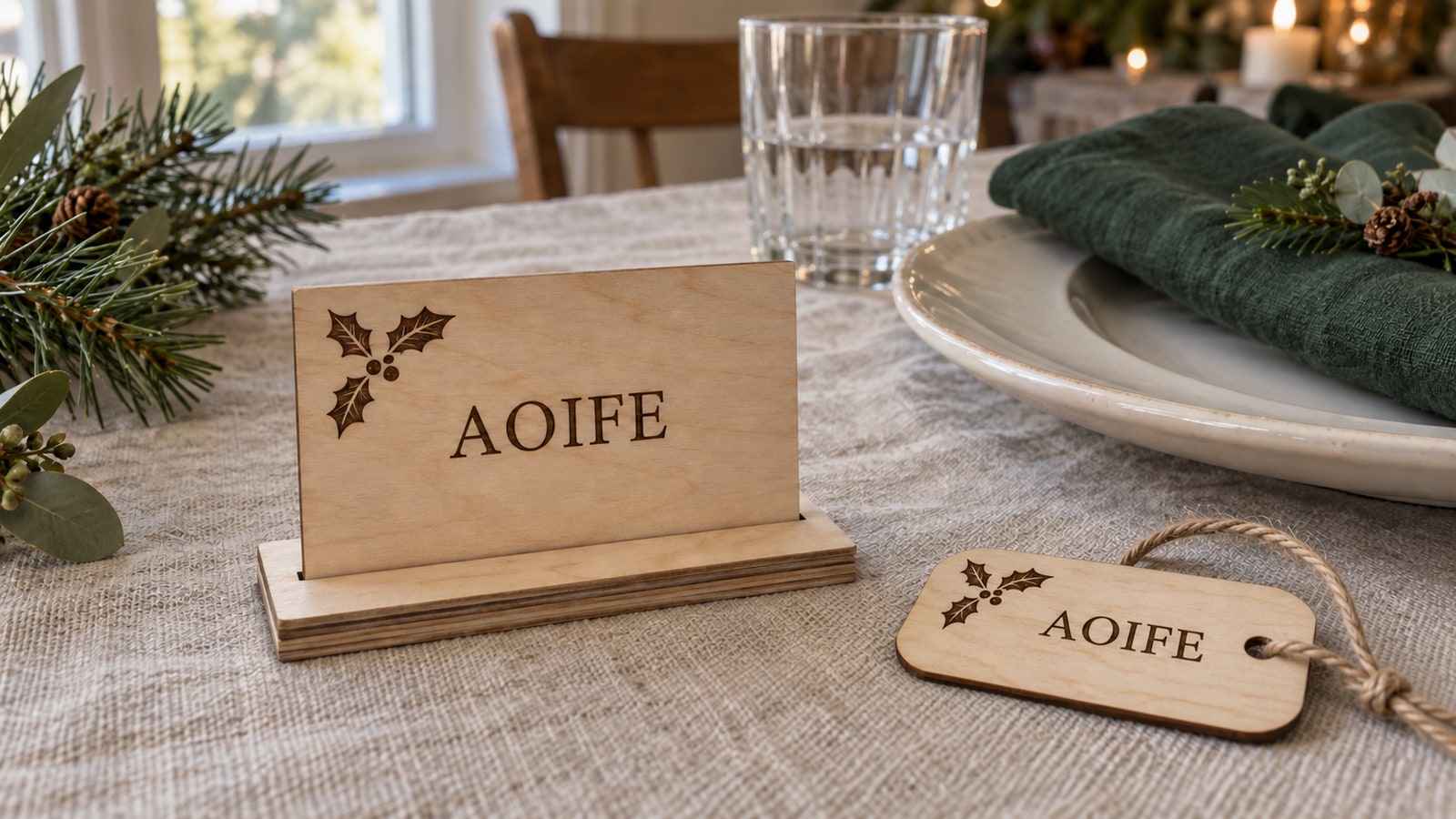
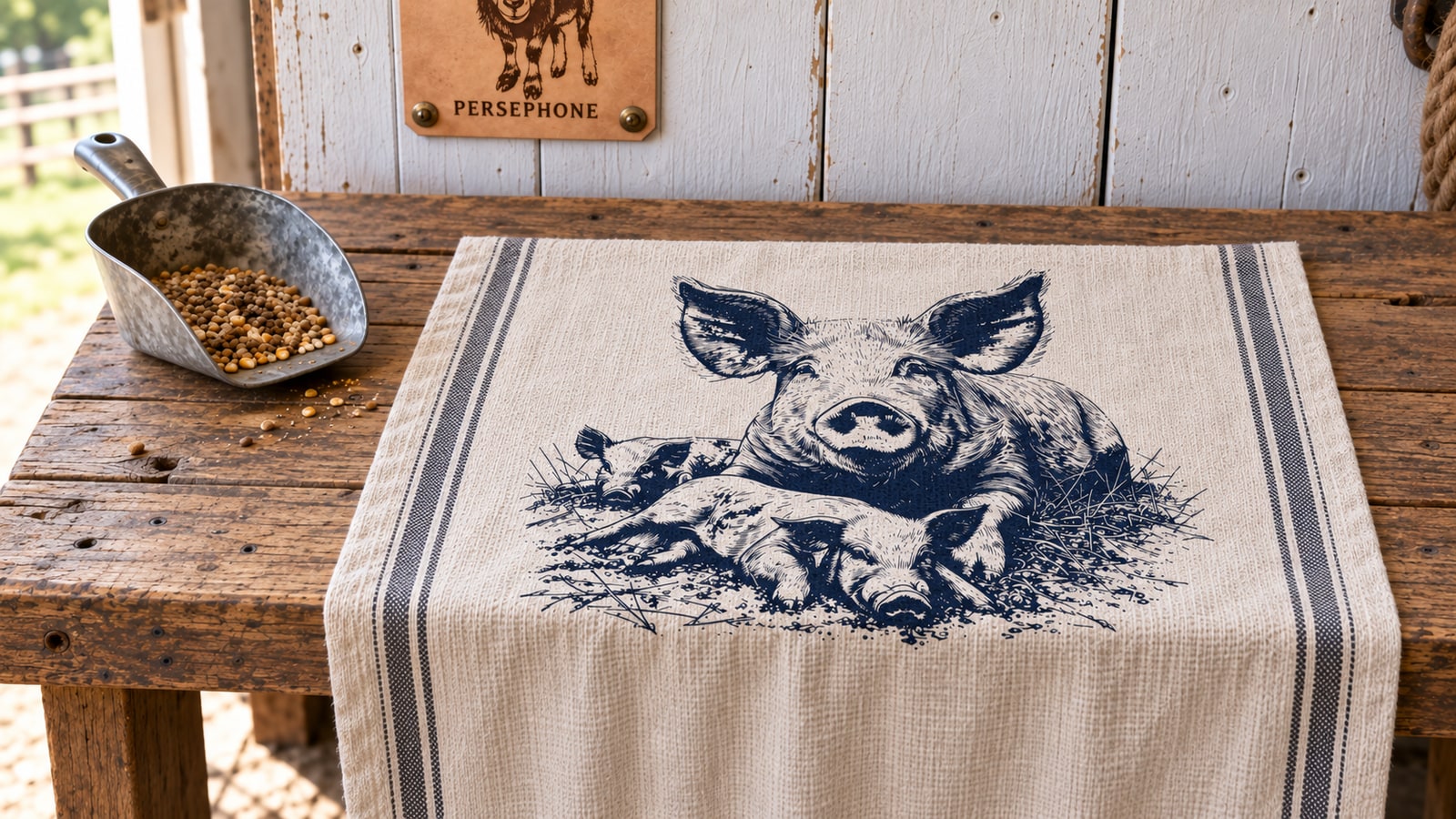
That makes this a custom order category more than a stock one. The design is the starting point and the name is what somebody is actually buying. Confirm the spelling in writing before you cut, because engraving is permanent and Persephone the goat has a lot of letters in her.
Our personalisation post covers running that properly.
Where to start
Start with a simplified pig design whose connections are easy to inspect, then test it in your material. Settings, blade condition, size and material all still apply.
Then try a goat head study with slightly heavier horns than the reference, and see how small you can take it before the horns give up. That number is genuinely useful to know for everything else in this group.
Every pack is $3.99 and ships as SVG, PNG, JPG, PDF, and EPS, so one purchase covers the engraved stall tag, the vinyl decal, and the sublimated mug. The commercial license is included with every purchase with no cap on how many physical products you sell, and print-on-demand is allowed.
Browse the farm animals collection for the rest of the homestead.
Designs for this project
Frequently Asked Questions
Which of these animals is easiest to cut?
A simplified pig can be a useful starting point because of its broad body, but ears, legs and a curled tail can still be fragile. Inspect each design’s connections. Goat horns and donkey ears often deserve particular attention.
Why does sheep fleece cause problems?
Because the thing that makes a sheep look like a sheep is texture, and texture is engraving. Cut out as an outline, fleece becomes either a lumpy edge that reads as noise or a set of fine curls with no material behind them. A sheep wants to be engraved, or drawn as a smooth simplified silhouette that suggests fleece rather than reproducing it.
Who actually buys homestead animal designs?
Mostly people who keep a few animals rather than farm commercially, and the people who buy gifts for them. Someone with three goats and a dozen chickens is a different customer from a commercial producer, and they buy for the barn, the kitchen, and each other.
Do these work as small items like keychains?
Pigs and sheep do, if the sheep is simplified. Goats and donkeys need their horns and ears thickened deliberately or reduced to head studies, because at charm size those features are the first thing to break.