Somebody's birthday is in two weeks. You have access to a laser, you have a design you like, and you are staring at a supplier page with slate coasters, birch rounds, and clear acrylic discs sitting next to each other at roughly the same price. Nothing on that page tells you which one to put in the cart.
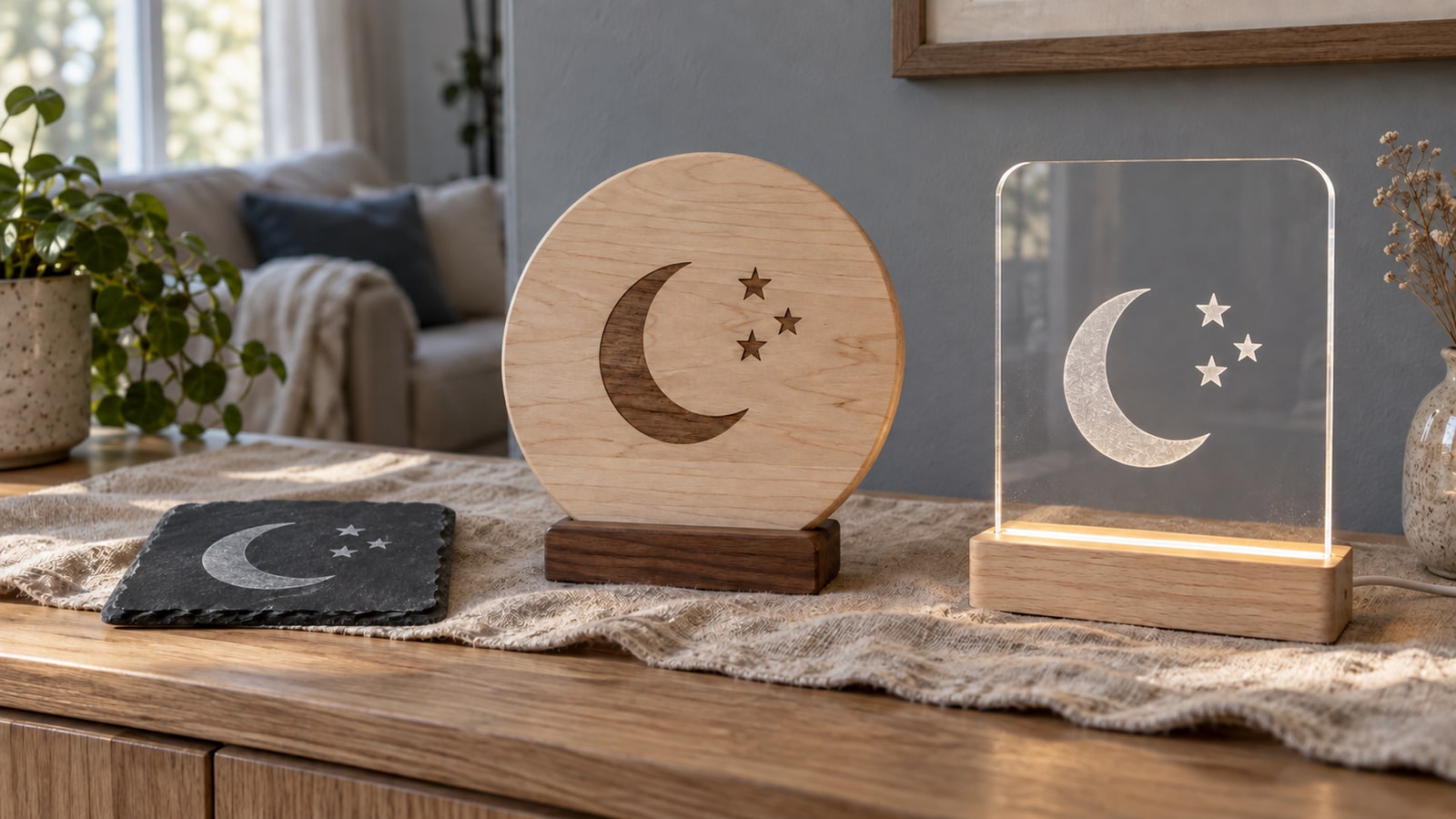
Most guides answer this by listing material properties. The more useful answer is that these three blanks are not three surfaces for the same picture. Each one flips or shifts the way your artwork reads, so the material you buy quietly decides whether the design you already picked is going to work at all.
Tip
Short answer: wood is the safe default, because it marks dark on light, which is how most artwork is drawn already. Slate is the showpiece, but it marks pale on dark, so check the design’s polarity and finest detail. Cast acrylic is the one for anything that will be lit, because the engraving glows.
The blank changes the picture
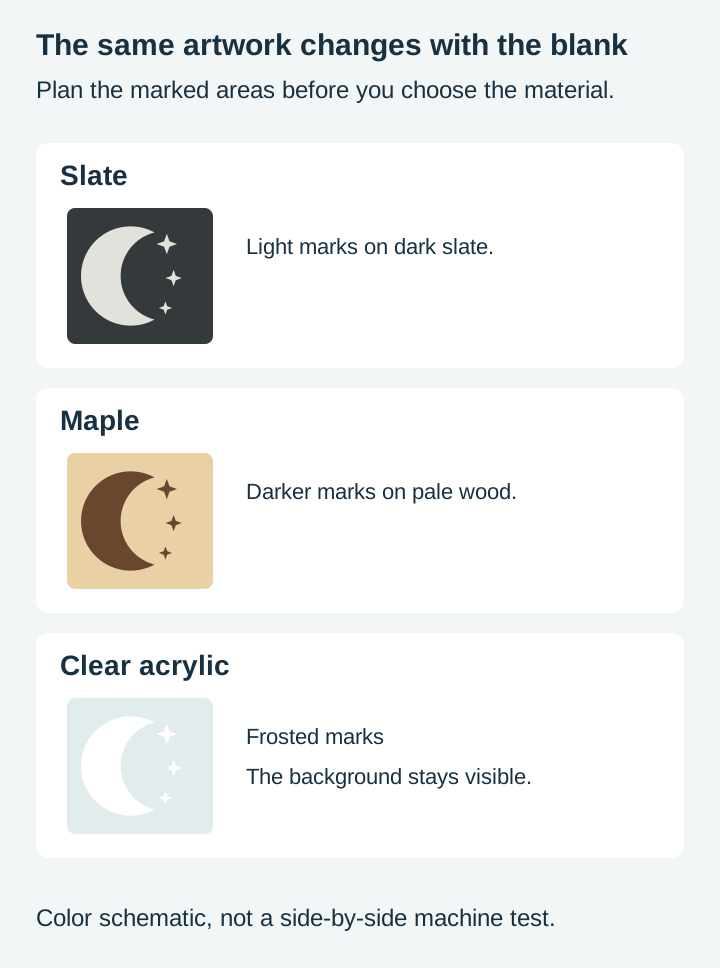
Three materials, three completely different physics, and three different answers to the question "which part of my file ends up bright?"
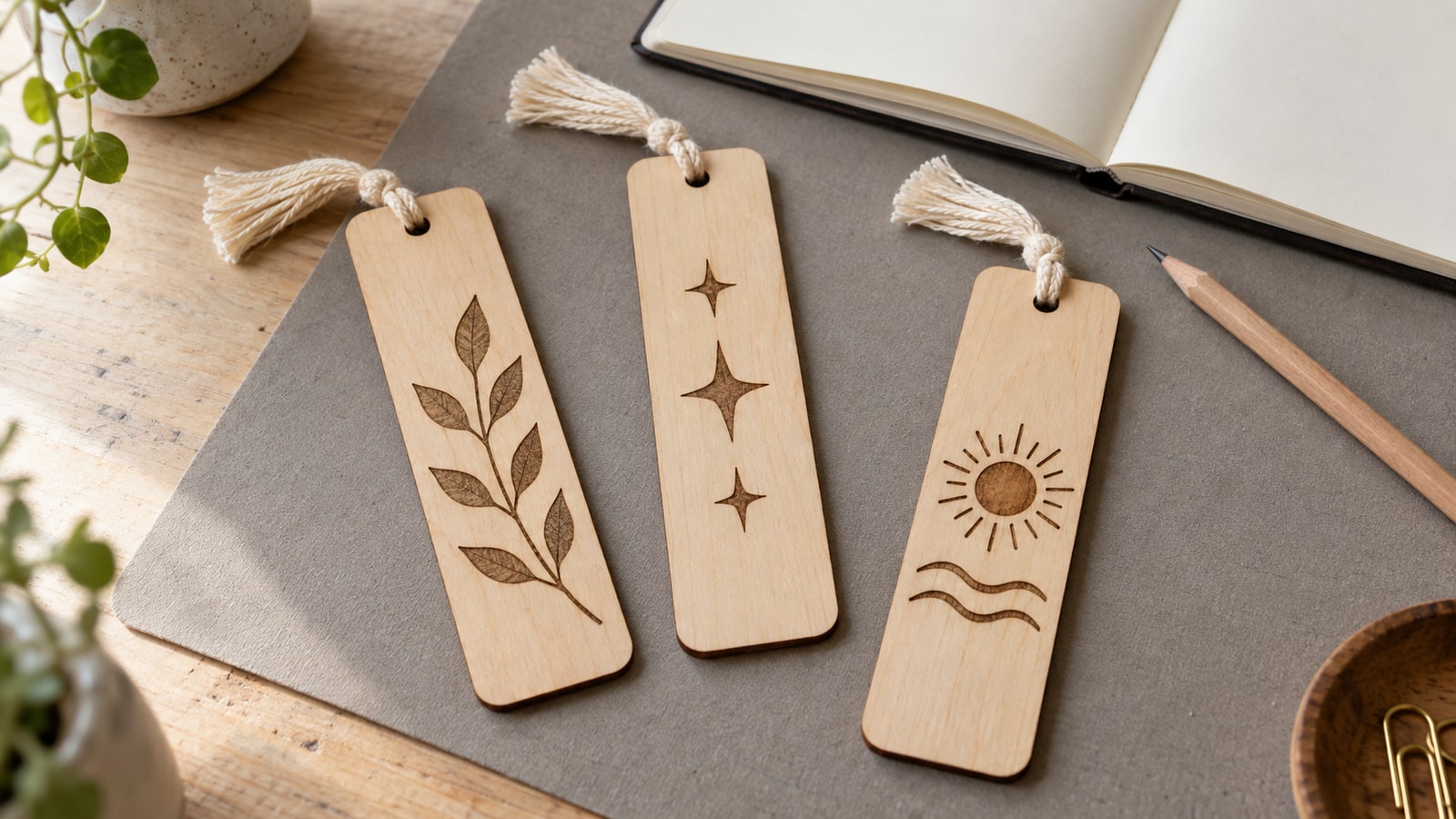
Wood burns. The beam chars the surface, so the marked areas go dark against pale timber. Epilog notes in its material guidance that lighter woods such as cherry and maple produce very nice contrast where the laser burns away the surface, and that grayscale artwork works well on wood because the timber reacts differently to each level of grey. This is the conventional direction: dark ink on light paper, dark scorch on light wood. Your design lands looking more or less like the preview on your screen.
Slate does the opposite. The laser alters the surface of the stone rather than burning a pigment into it. Thunder Laser's stone guide describes it plainly: laser energy changes the microscopic structure and texture of the slate surface, and "the modified area scatters light differently from the surrounding dark material, which can make the engraving appear light gray or whitish." The same guide adds the consequence that catches everyone out, that dark slate and other dark stones "commonly produce a lighter engraving, so photographic artwork may need to be inverted."
That inversion is the whole story with slate. Every black region in your file becomes a bright region on the stone, and every white region stays dark. A silhouette turns into a glowing subject against near black, which is exactly the effect slate is famous for. Linework becomes light on dark, which can be intentional. Test thin strokes against the texture of the actual stone.
Acrylic frosts. Engraved cast acrylic goes white and matte. Epilog puts it as cast acrylic being used for almost all engraving purposes "because when it is engraved, it produces a white, frosty look that makes for a clean contrast against the clear material." OMTech describes the same result as a bright frosted white with excellent contrast, and contrasts it against extruded acrylic, which "engraves clear, dull grey, or 'wet' looking" and is prone to melting.
Acrylic then adds a trick neither of the others can do. OMTech explains that light travels through the sheet until it hits an engraved scratch, which makes that scratch glow. Stand a clear engraved panel in a cheap LED base and the design lights up while the sheet around it stays invisible. The material stops being a background and becomes a lamp.
How each one reads, side by side
The table below is a design-side starting point, drawn from how we build the files rather than from measurements of any particular blank. Stone, timber, and sheet all vary by supplier, so treat it as the shortlist and test on a spare piece before you commit the gift.
| Material | How the mark reads | Artwork that suits it | Artwork that disappoints |
|---|---|---|---|
| Slate | Pale gray to white on dark stone | Clear silhouettes, suitable linework, prepared dithered images | Detail too fine for the stone texture; unintended polarity |
| Pale wood | Dark brown scorch on cream | Almost anything, including grayscale shading and fine line work | Very dense fills on resinous species, which blotch |
| Cast acrylic | Frosted white on clear or color | Linework and filled motifs sized for the intended lighting | Dense detail or fills that obscure the intended composition |
Read that middle column as a shopping instruction, not a design theory. If the pack you have chosen is built from strong filled shapes, slate is available to you. If it is built from fine linework, wood or acrylic will treat it better.
Slate: the gift that looks expensive
Slate is the material people assume you paid a professional for. The stone is nearly black, the mark comes out bright, and the contrast flatters even a simple design. Blanks arrive pre-cut with chiselled edges and often felt feet on the bottom, so the piece looks finished before you have engraved anything.
It suits gifts that want to feel permanent. The mark is fractured stone rather than a coating, so it is not an applied decal that can peel; wear, chipping, staining and surface treatments can still change its appearance, and that permanence matches the sentiment on memorial pieces, anniversary gifts, house signs, and anything commemorating a date. A slate coaster set with four related designs makes a better present than one lone coaster, and costs a few dollars more in blanks.
Where it will bite you: the stone is heavy, which makes posting it expensive, and the corners chip if the piece slides around in a box. Quality also varies wildly between suppliers and even between pieces in one order, so a batch that produces a brilliant white mark can be followed by a batch that only ever goes dull grey. Buy a couple of spares from every order and treat one as the test piece.
The artwork requirement is the real gate. Because the file reads as a negative, slate needs an intentional positive or negative treatment and appropriate detail sizes. Our slate packs are drawn for exactly that, with big solid areas and nothing thinner than natural stone texture can hold.
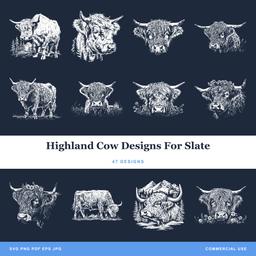 Highland Cow Designs For Slate47 designs, commercial license included$3.99
If slate is where you are heading, the complete slate engraving guide covers stone selection, test grids, and finishing in detail.
Wood: the one that forgives you
Wood is the material to choose when the gift matters more than the experiment. It marks in the direction your design was drawn, blanks cost very little, and the warm burn against grain is what most people picture when they hear "engraved gift".
Pale, tight-grained species do the heavy lifting. Basswood and Baltic birch are common starting materials, but flatness, veneers and batch behavior vary, which is why they are the standard first purchase. Maple and cherry step up the presentation for a gift that wants to look like furniture rather than a craft project. Walnut may mark lighter or darker depending on the wood and process; check a finished sample instead of assuming an inverted result.
Wood is also the friendliest to personalise. Names, dates, and quote designs read cleanly because dark-on-light is exactly how lettering is meant to work, and grayscale shading survives on timber in a way it does not on textured stone.
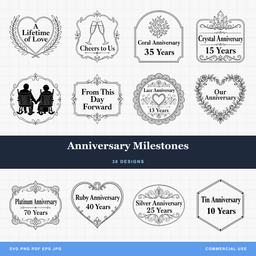 Anniversary Milestones30 designs, commercial license included$3.99
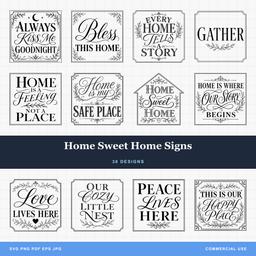 Home Sweet Home Signs30 designs, commercial license included$3.99
The honest downsides are grain and finish. Resinous woods such as pine burn unevenly, with sap lines going darker than the wood around them, so a design that looked crisp on birch can come out blotchy on a cheaper board. Anything that will be handled or used with food also wants a finish afterwards, whether that is a wipe of food-safe mineral oil on a board or a clear coat on a sign. Our wood species guide goes species by species if you want to choose deliberately.
Acrylic: the modern one, with one buying trap
Acrylic is the pick for gifts that want to look contemporary rather than rustic. Keychains, ornaments, cake toppers, desk pieces, and nightlights all live here, and the frosted mark against a clear or coloured sheet reads as a product rather than a craft.
The buying trap is cast versus extruded, and it is worth repeating because the two look identical in a listing photo. Cast engraves bright frosted white. Extruded sheet generally gives less frosted contrast, although settings still matter. Ask for the acrylic type if the listing does not identify it.
Edge lighting is the reason to reach for acrylic in the first place. Engrave a design into clear cast sheet, drop it into an LED base, and the engraved lines glow while the rest of the panel disappears. This changes what artwork to choose in a way people often learn the expensive way: for an edge-lit piece the engraved area is the bright area, so an open line drawing gives you a glowing outline, while filled areas can create larger luminous shapes. Neither is automatically wrong; compose the lit and unlit regions deliberately.
Two more things to know before you gift it. Acrylic is softer than glass and scratches during handling and transport, and ACRYLITE’s care guidance recommends mild soap, lukewarm water and a soft cloth for routine cleaning. Follow the sheet maker’s compatibility instructions for specific cleaners and concentrations; avoid generic window sprays and acetone. And if you are running a blue diode laser rather than a CO2 machine, clear acrylic is effectively invisible to the beam, so use only a colored or opaque sheet that the machine and material suppliers identify as compatible. Color alone is not a guarantee. The acrylic project guide covers both points properly.
Pick by the occasion, not by the material
Working backwards from the gift is usually faster than working forwards from the blank.
Anniversaries, weddings, and milestone dates. Slate or a good hardwood. Both read as permanent, and both suit a date and two names as the entire design. Slate is the more dramatic of the two, hardwood the more traditional.
Memorials, including pet memorials. Slate, almost every time. The permanence of stone matches the sentiment, and a bold portrait silhouette is exactly the artwork the material wants.
Housewarmings and kitchen gifts. Wood. Cutting boards, family name signs, and recipe boards all want a warm surface, and a food-safe finish is straightforward.
Kids' rooms and anything for a desk. Cast acrylic with an LED base. Nothing else glows, and the wow factor per dollar is hard to beat.
Craft fair stock rather than one present. Start with wood while you learn the machine, then add slate for the pieces that need to look premium on the table. Both give you a sellable result from a blank that costs a few dollars.
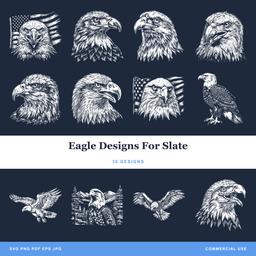 Eagle Designs For Slate30 designs, commercial license included$3.99
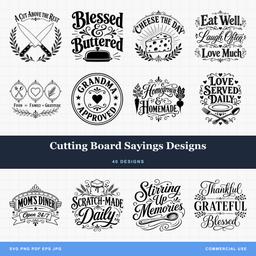 Cutting Board Sayings Designs40 designs, commercial license included$3.99
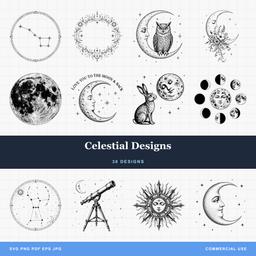 Celestial Designs30 designs, commercial license included$3.99
Open the file before you buy the blank
Here is the step that saves the most money, and it costs nothing. Before ordering blanks, open the design and ask two questions.
Is this built from filled shapes or from outlines? Zoom in until you can see whether the artwork is solid black regions or thin strokes on nothing. Filled shapes go anywhere, including slate. Outline-heavy artwork can also work on stone when its strokes survive the texture. Judge polarity, contrast and detail at the intended size.
How small is the smallest detail once it is on the blank? A design that looks intricate on a monitor is being viewed at maybe ten times its finished size. Scale it to the actual blank in your software before you order, and look at the thinnest stroke at that size. Fine detail survives on smooth pale wood and cast acrylic. Stone texture eats it. Our small item detail guide covers where that limit sits.
Both questions are file questions rather than machine questions, which is the part we can speak to directly. We draw these packs, so we know which ones are built from solid silhouettes and which carry fine linework, and the slate packs are drawn differently from the rest on purpose.
The practical stuff nobody mentions
Budget. All three are cheap by gift standards. Slate coasters, birch rounds, and small acrylic blanks all sit in the same low single-digit range, which means a failed attempt costs less than a greetings card. Buy three of whatever you choose and treat the first as a test.
Shipping. If the gift is going in the post, wood wins easily. Slate is dense enough to change the postage bracket and chips at the corners, and acrylic arrives with protective film for a reason.
Time. Use a familiar, tested blank when the deadline is close. Every material needs preparation and testing; a required finish may add drying or cure time.
Which machine you have. A blue diode laser handles slate beautifully, because dark stone absorbs that light readily, and handles wood well. Clear acrylic is the one it cannot do. A CO2 machine handles all three.
Choosing the design and the blank together
The recommendation, boiled down: buy wood for your first engraved gift, buy slate when you want the recipient to gasp, and buy cast acrylic when the piece is going to be lit. Then choose the artwork to match the direction the material marks, rather than choosing artwork first and hoping.
Every pack we sell is $3.99 and ships as SVG, PNG, JPG, PDF, and EPS, with a commercial license included and no cap on the physical products you sell, so the same file can go on a birch plaque for a friend and a run of slate coasters for a market table. The slate collection is drawn specifically for light-on-dark stone, and the quotes and text collection covers the names, dates, and sayings that most gift projects are actually built around.
Designs for this project
Frequently Asked Questions
What is the easiest material for a first engraved gift?
Pale, tight-grained wood such as basswood or Baltic birch. It marks dark on light, which is the way most artwork is already drawn, so almost any design works without editing. Blanks are cheap enough that a failed attempt costs pocket change.
Why does my design look wrong on slate?
Slate marks pale on dark, so the artwork reads as a negative. The black areas of your file become the bright areas on the stone. Both filled shapes and linework can work, but check the intended polarity and detail size. Photographic artwork may need inversion and dithering.
Does the type of acrylic matter for an engraved gift?
Yes, and it matters more than any setting. Epilog and OMTech both publish that cast acrylic engraves to a bright frosted white, while extruded acrylic engraves clear or dull grey and is prone to melting. If the product listing does not identify the type, ask the supplier.
Which engraved gift material survives shipping best?
Wood. Slate is heavy and chips at the corners if it moves inside the box, and acrylic scratches easily because it is softer than glass. Wood shrugs off a knock and costs the least to post.